

Environmentally friendly home decor now means more than a natural appearance. It focuses on materials that create a peaceful feeling in the room. These materials age with less visual clutter. They also avoid the heavy plastic impact of many synthetic carpet materials. People who create sustainable living spaces often begin this process underfoot. A natural fiber rug can alter how a room feels. It does this before it changes how the room looks.
Why is Eco-Friendly Home Decor Becoming Essential?
The Shift Away From Synthetic Carpet Materials
Synthetic carpet materials face more judgment these days. The judgment goes beyond color and softness. Buyers now consider indoor air pollution. They examine VOC emissions. They also weigh the long-term burden of plastic-based construction. A carpet may look polished. Yet it can still feel wrong. This occurs if it adds to a busier indoor environment. It may create a disposal problem later. This explains why sustainable interior design now moves toward simpler material choices. It uses fewer synthetic layers.
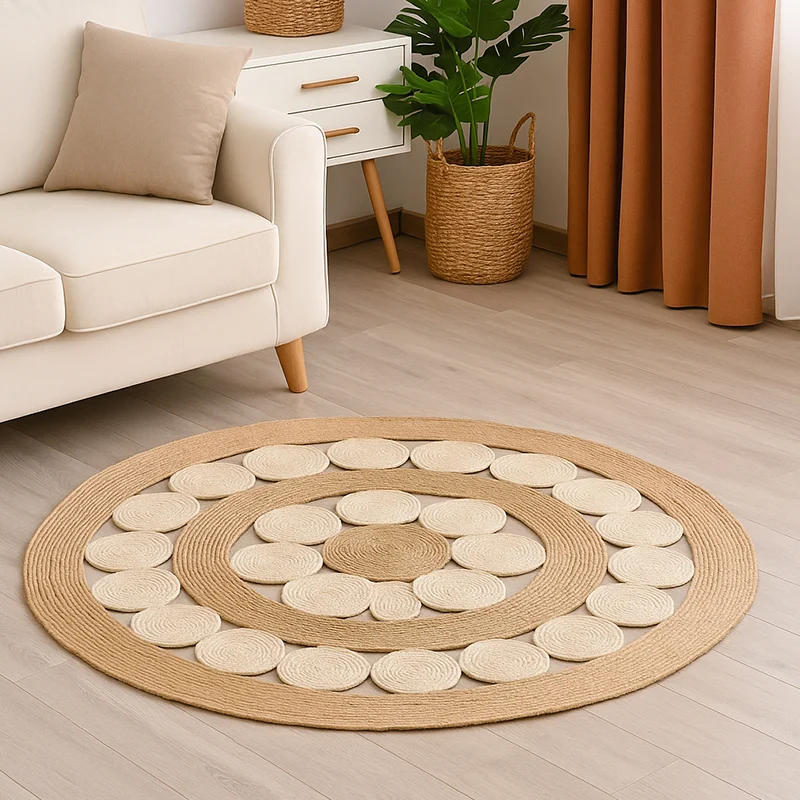
Embracing Natural Fibers for Sustainable Living
Natural fiber rugs support sustainable living. They create a quieter visual field. They also produce a more organic home decor feel. They do not compete with furniture and lighting. Instead, they support the room from the background. This quality proves useful in eco-conscious homes. The goal in these homes is balance rather than excess.
What Makes Natural Rattan Rugs a Premier Sustainable Choice?
100% Biodegradable and Fast-Growing Characteristics
Natural rattan and related plant-based fibers come from renewable raw materials. They do not rely on petroleum-based pile systems. In the right product construction, they offer a more biodegradable end-of-life option. This option exceeds many synthetic carpet materials. The practical point remains clear. It centers on whether the full rug structure stays aligned with the eco-friendly material promise. This includes backing and finish.
Handwoven Craftsmanship That Reduces Carbon Footprints
Handwoven craftsmanship holds importance. An artisanal floor mat is often built through traditional weaving techniques. These techniques avoid heavy industrial processing. They reduce dependence on machinery. They keep the product feeling more human in scale. This does not mean every handwoven piece is automatically low-carbon. Yet it explains why many buyers link the format with lighter production energy. It also connects to a more natural look.
SANGNI’s DDH0001 Natural Straw Rattan Woven Floor Mat for Indoor Decor shows how a woven natural-look floor piece can warm up interior styling without becoming visually heavy.
Top Benefits of Decorating With Handwoven Rattan Carpets
Exceptional Durability for High-Traffic Living Spaces
A well-made handwoven rattan carpet can handle everyday use. The weave itself provides structure. In high-traffic living spaces, this feature matters as much as the material name. Tight construction helps the rug keep its shape. A simpler surface usually wears in a steadier way. Plush synthetic piles often trap more visible lint. They also flatten unevenly.
Enhancing Safety With Non-Slip Backing Designs
Safety depends partly on the backing. If a rug includes a non-woven fabric backing, it improves floor contact. This helps protect floors. For buyers, this is not a decorative detail. It keeps a natural-looking rug from feeling loose. It prevents sliding. It avoids an unfinished look once the rug is placed in the room.
For sourcing teams comparing different rug constructions, our team can help organize supplier options and sample discussions through product sourcing.
Promoting a Healthier, Non-Toxic Indoor Environment
Many homeowners prefer natural-fiber rugs. These rugs support a simpler indoor environment. The appeal lies in reduction rather than perfection. Fewer heavy coatings help. Fewer loud materials help. Fewer synthetic cues help. These changes can make a room feel more breathable. They reduce chemical busyness. In bedrooms and family spaces, this calmer material profile often matters as much as the look itself.
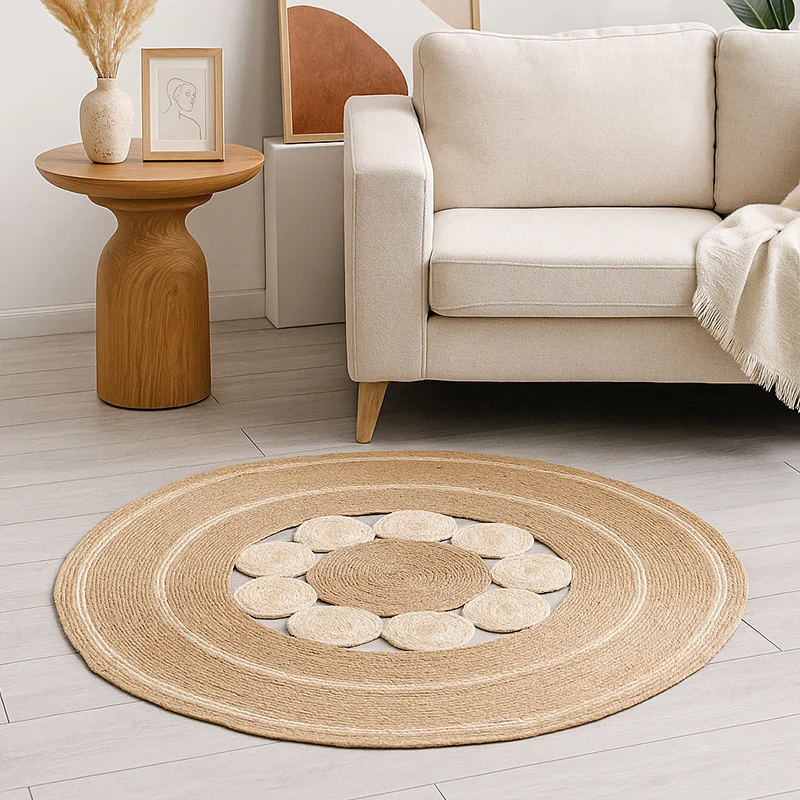
Styling Versatility: Where to Place Your Eco-Friendly Floor Mats
Grounding the Living Room With Earthy Textures
A living room area rug made from natural fibers can anchor the seating zone. It does so without overpowering the space. Earthy textures work well in bohemian home decor. They suit rustic elegance. They fit restrained modern interiors. They add warmth without adding visual clutter. Placed under a coffee table, the rug helps define the room. The same occurs in front of a sofa. It defines the room in a quiet way.
Adding Warmth to Bedrooms, Children’s Rooms, and Meditation Spaces
In a bedroom, a cozy area rug beside the bed can soften the first morning step. In a children’s room, a simple woven surface helps the space feel warmer. It also makes the room feel more grounded. In a meditation corner, the same material supports stillness. It performs better than glossy or high-shine surfaces. The point is not to use a rug everywhere. It is to place it where a calmer floor surface improves the room’s mood.
Essential Maintenance Guide for Natural Fiber Rugs
Daily Cleaning and Dust Removal Best Practices
Daily cleaning is usually straightforward. Shake out loose debris. Vacuum gently. Or wipe the surface with a slightly damp cloth when needed. Dust removal best practices matter. Natural fiber weaves look best when dirt does not sit inside the texture. The goal is easy-to-maintain care. It is not aggressive cleaning.
Managing Moisture and Protecting Against UV Fading
Moisture prevention is essential for natural fiber care. Keep the rug away from damp corners. Avoid standing water. Stay clear of other conditions that can shorten rug quality. Direct sun deserves attention too. Long exposure can fade the surface. It can make the material look tired earlier than expected. A natural rug lasts longer when it stays dry. It also benefits from staying out of harsh light.
For teams comparing sourcing options, SANGNI can connect samples, packaging review, and batch checks through quality control and assurance.
FAQ
Q: Are natural rattan rugs comfortable to walk on with bare feet?
Yes. When the fibers are finished smoothly and the weave is tight, the surface usually feels lightly textured rather than rough. This gives bare feet a clean, natural feel. It works well in relaxed rooms.
Q: How long do eco-friendly rattan floor mats typically last indoors?
With normal indoor use and reasonable care, they can last for years. Longevity depends on moisture. It depends on sunlight. It depends on traffic level. It also depends on how well the weave and backing hold up over time.
Q: Can I place a handwoven rattan carpet in a kitchen or dining area?
Yes, but only with care. A dining area rug or kitchen decor piece in a dry zone makes more sense. This is better than one near repeated spills. Natural fibers perform best where splash risk is controlled.
Q: What is the best way to clean spills on a natural fiber rug?
Blot the spill. Do not rub it. Use a clean, dry cloth first. Then use a slightly damp cloth if needed. Let the area air-dry naturally. Fast attention matters more than harsh cleaning.
Q: Do sustainable rattan rugs shed over time?
They can shed a little at first, especially if the weave is new. That initial shedding usually settles after gentle vacuuming and normal use. It should not continue heavily if the rug is well made.


