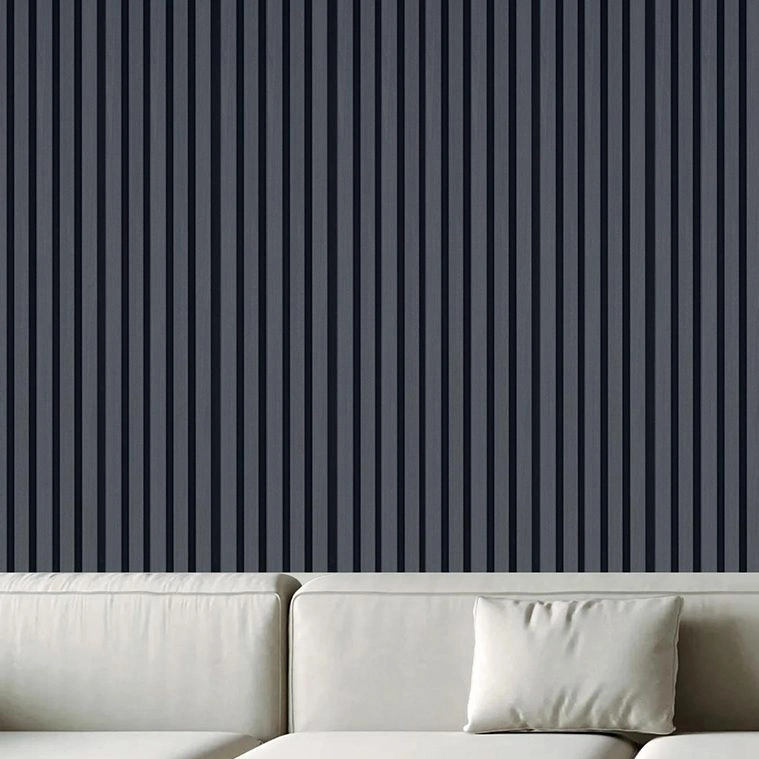

An office wall panel must support a strong visual concept. It has to handle meetings. It deals with foot traffic. It manages cleaning. It also allows later changes. PVC wall panels can be considered when the brief treats the wall as a system. Define the zones first. Choose a finish that matches the light next. Then plan the fixing details before ordering.
Draw a simple sketch of the wall elevation, including dimensions, openings, sockets, cables, furniture, etc. Look at how the panels will look when viewed from the outside of the space, from within the space at workstations, and from within the space at the meeting area. This is far more useful than simply signing off a small sample.
Read the office before choosing a panel
Map zones, light, and sight lines
Separate reception, collaboration, private-work, and circulation walls. A reception feature wall can carry bolder texture. A corridor often needs a softer rhythm. This rhythm does not compete with signs. Check daylight, ceiling spots, and screen reflections. A panel that looks even in a showroom may feel crowded beside glass partitions or dark furniture.
Set a repeatable visual language
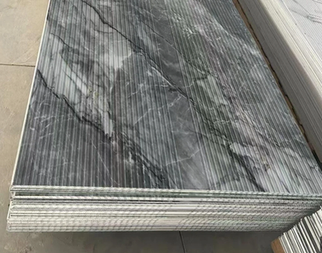
Choose one main direction. This could be vertical rhythm, calm stone, or a restrained wood look. Repeat it with consistent joints and edge conditions. Keep the strongest pattern away from wayfinding and screens. Review the wall-panel product category when comparing related panel forms. Keep the final material, dimensions, and fixing method open for project confirmation.
Before committing to a main finish, assemble a small board. Use the proposed panel, paint, flooring, furniture fabric, and lighting reference on it. Review it beside the intended wall in daylight. Review it under the lighting used after hours too. Record which finish is the background. Record which one is the accent. This way a later substitution can be checked against the intended hierarchy. It should not be chosen because a sample looks attractive on its own.
Choose a design direction that scales
Use one feature wall with supporting planes
Use PVC wall panels on the Reception area & Meeting area backdrop surfaces. Keep adjacent surfaces simple. Where larger areas are to be fitted out repeat same direction on odd-numbered columns or other low frequency areas. Do not fit all surfaces with wall panels. Such an application would create sterile backgrounds which would result in all areas of the interior looking identical. Keep a quiet plane adjacent to screens & allow them to be the focal point. The backgrounds will support the work & not conflict with it.
Keep joints, corners, and transitions readable
Show where panels end, eg at door frames, skirting, ceiling, or where a change in material occurs. Try to align visible joints with lines of furniture or lighting. Don’t promise a seamless join until you have checked the underlying substrate and edge detail profile. Draw up the transition details at the same scale as the panel detail on the take-off. This allows the installers and buyers to walk around the information on one consistent layout.
Prepare the wall and installation sequence
Check the substrate and service routes
Look over the surface to confirm how even it is. Check it also for any extra dampness before cutting. Mark the positions for sockets. Mark the positions for data points. Mark the positions for display fixing points. Mark the positions for cable routes on the elevation. Think carefully about how the chosen PVC wall panels will attach to the prepared surface. Never just assume a common adhesive, clip, or fastener will work. Be certain that access panels and ventilation stay clear through the proposed panels.
Dry-fit, fix, and finish the edges
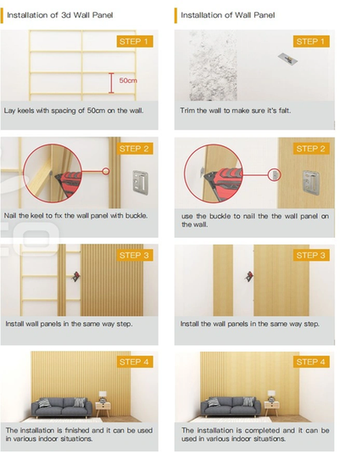
Lay out the first and last panels before permanent fixing. This prevents narrow slivers at a visible corner. Dry-fit around outlets and door trims. Then check the joint rhythm from normal viewing distance. Use the approved edge and corner treatment at returns. The PVC wall-panel installation sequence is a preparation reference. The selected product specification should control the actual installation method.
At handover, keep the approved finish code, panel orientation, edge detail, product-care instructions, and locations of concealed services together. Give maintenance staff this information. Include any spare material. It can help them identify the correct replacement. It also helps them plan access without reopening an unnecessary part of the wall.
Build a purchase and inspection brief
Approve a sample and written specification
SANGNI supplies interior and home-use products through organized product categories and sourcing support. The category helps organize an initial shortlist. The application remains the starting point for the office brief.
Product selection should match the application, dimensions, materials, maintenance needs, and installation or purchasing conditions. Record those fields. Include the approved finish, panel orientation, dimensions, edge details, fixing instructions, quantity, and permitted substitutions in one specification.
SANGNI supports supplier discovery. It evaluates supplier capabilities and alignment with required standards. It can coordinate samples and prototypes before full-scale production. Keep the sample, prototype notes, and buyer approval with the same brief. This ensures a visually similar substitute does not enter the project under a different assumption. Use the product sourcing service when the supplier discussion needs a documented application and sample review.
Plan packaging, quantity, and replacement stock
SANGNI provides a service scope. It covers pre-production verification, in-process checks, final product evaluation, packaging review, loading oversight, warehousing, and international logistics coordination. These reviews do not create zero-defect results. They do not promise on-time delivery either. Set inspection points at the start. Next, set carton protection. Also set spare panels, lead time, release evidence, and replacement handling. Finish these steps before anyone approves the order. The quality-control service gives the team a place to discuss the checkpoint sequence.
For each elevation, keep an explicit review sequence. Start with application and dimensions. Then material and maintenance. Next comes fixing, packaging, inspection, warehousing, and shipping conditions. We can coordinate that discussion around the approved brief. The buyer retains final approval of the office specification and any substitution.
FAQ
Q: How should an office wall-panel design start?
A: Begin with a measured elevation. It must include doors. It must include outlets. It must include furniture. It must include sight lines. It must include joint positions. It must include the intended feature wall.
Q: What should I check before installation?
A: Confirm substrate flatness. Check service routes. Verify panel orientation. Check edge details. Review fixing instructions. Examine the dry-fit layout. Complete all these actions before permanent work.
Q: How can a large office avoid a repetitive wall treatment?
A: Repeat one panel direction on selected zones. Then use quiet adjacent finishes and consistent transitions to maintain hierarchy.
Q: What belongs in a bulk PVC wall-panel brief?
A: Include the approved sample, dimensions, finish, edge and joint details, quantity, packaging, inspection points, spare stock, lead time, and substitution rules.