

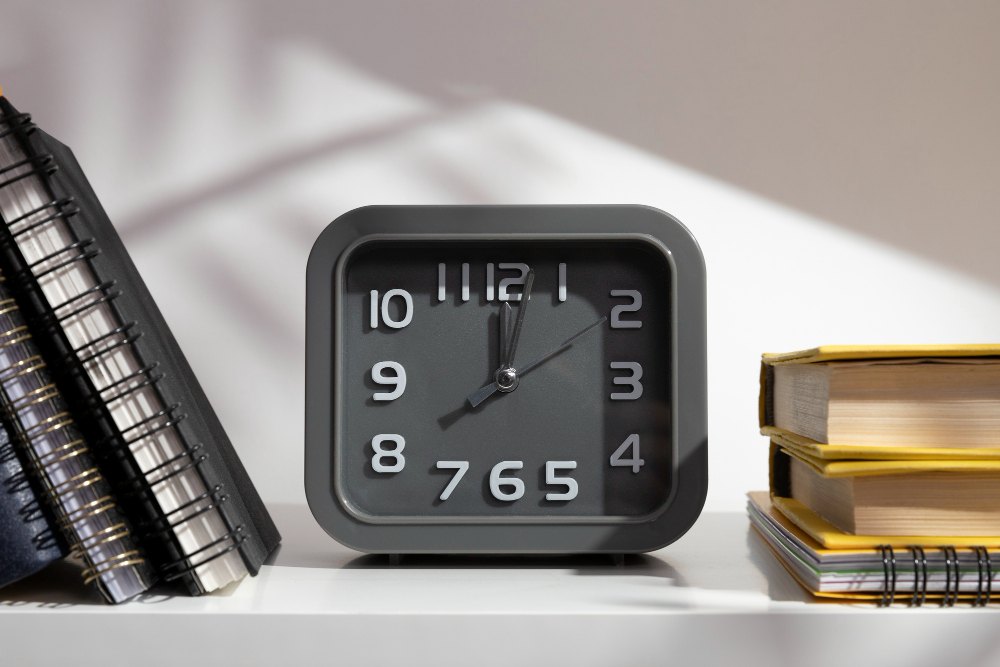
A clock on a shelf has to earn its few inches of space. From the doorway it should be readable; close up, the case and hands have to hold their own beside books, a lamp, or ceramics. For a 2026 assortment, a striking product photograph is only a starting point. The buyer still needs to know whether the clock stands securely, how it sounds in a quiet room, and what arrives in the box.
What Defines a Contemporary Shelf Clock in 2026
Shape and Scale
Place the sample where it will actually live. A clean case and legible face may look better there than a complicated silhouette that was impressive in isolation. Step back to the doorway, then sit at the desk or sofa. If the hands disappear from one of those positions, the shape has won at the expense of the timepiece.
Measure the usable shelf depth as well as its width. A shallow console may take a small clock easily but leave little margin behind a wide base; an open bookcase needs the dial to show among other objects. Retail images should include a contextual view and a dimensioned view. A tight crop can make a modest clock look like a large statement piece.
Quiet Function
Listen to a running sample in a quiet room. A ticking movement may be unobtrusive in a hallway and irritating on a bedside table. Check the battery door while the clock is standing, too: replacing a cell should not require a frustrating balancing act. The hand contrast and the base’s contact with the shelf matter every day, long after the novelty of the shape has worn off.
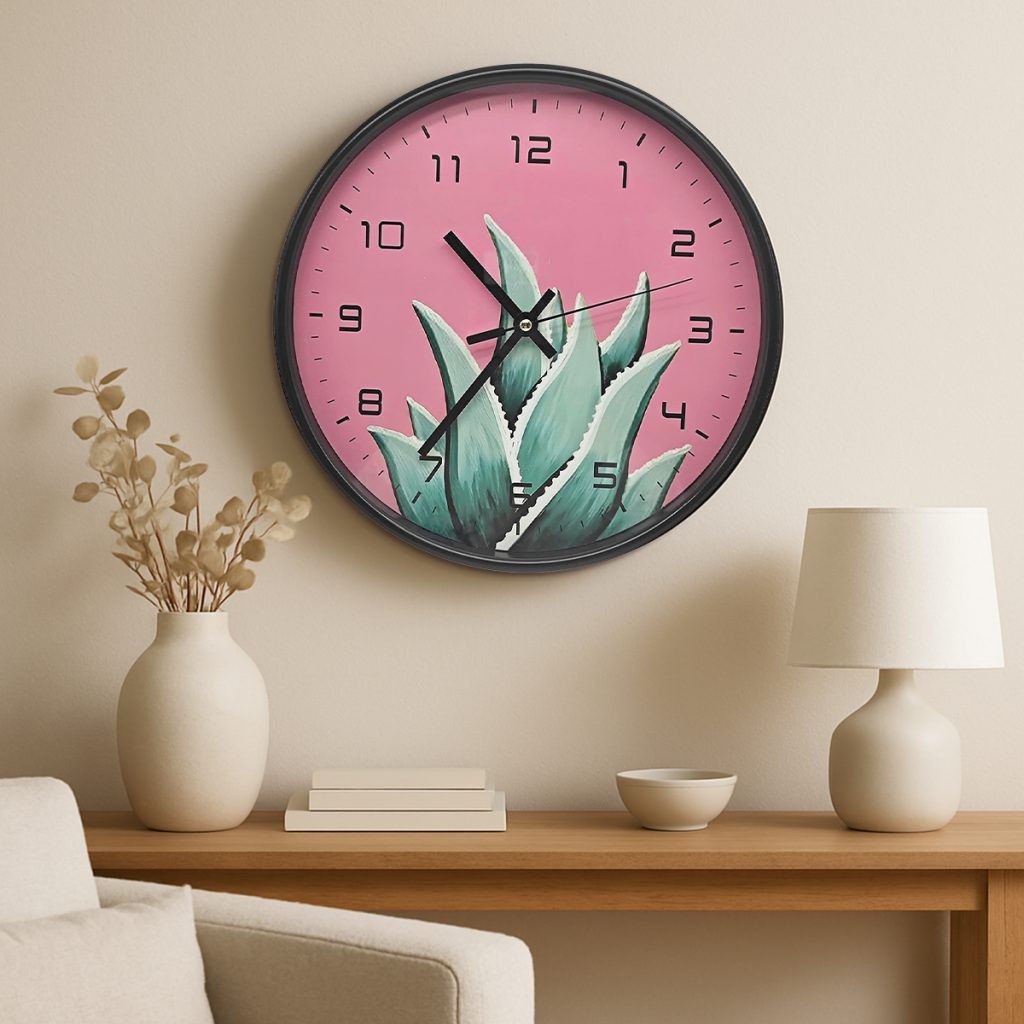
The SZZ0130 modern minimalist wall clock is a useful reference for materials and movement: its 30 cm diameter, metal frame, PP dial, metal hands, silent non-ticking quartz movement, and one-AA-battery format give buyers concrete specifications. The battery is not included. It is wall-mounted, not a verified freestanding shelf model; a shelf-clock brief must also confirm the base or stand.
Material Trends Shaping Buyer Demand
Metal and Mixed Materials
A narrow metal rim draws a precise outline around a dial. Against light wood, a dark frame can make a small clock visible from across the room; on a black shelf, the same frame may vanish. A wood-look base or a colored face can soften that effect. Ask which piece is actually metal, rather than treating a metallic finish as a material specification.
Plastic and Wood-Look Finishes
Molded components open up colors and shapes that would be costly in a heavier construction. A PP dial, for example, can keep the face clean and easy to read while allowing the case or surrounding styling to carry the decorative character. A wood-look finish brings warmth, but it should be described as a finish rather than implied solid timber.
Turn the clock over before approving copy for a listing. The back and base often reveal what a front-facing photograph cannot: the movement housing, support, and actual component mix. Describe the face, frame, cover, and stand separately. That lets a retailer compare products honestly even when two clocks share a similar silhouette.
Styles That Work Across Retail and Residential Spaces
Neutral Minimalism
Black, white, soft gray, and brushed finishes still have a place in a range because they can sit beside many kinds of furniture. Test contrast, though. A pale dial backed by a pale wall can lose its outline; a black case may disappear on dark shelving. Legibility is a room decision, not simply a dial specification.
Expressive Color and Graphic Dials
A clock is one way to bring a little color into a room without changing furniture. An olive or terracotta case might pick up a cushion or ceramic; a bright dial can make a sparse shelf less solemn. Graphic markers are worth trying, but check the time at normal viewing distance. A clever face that needs deciphering is a poor everyday clock.
An unusual outline also changes the footprint. Put a sample on a narrow shelf and gently test its stability before approving its hero photograph. Decorative hands and numerals should remain distinct against the face in ordinary room light.
How Buyers Are Evaluating Shelf Clocks
Product Specs and Packaging
The most useful listing answers the questions a buyer would ask while holding the carton: How deep is the base? Is a battery included? Can the hands be protected in transit? Record height, width, depth, movement, battery requirement, component materials, and care. A close photograph of the rear support and an unpacked sample can be more revealing than another styled shelf shot.
Run a sample, unpack another, and compare both with the listing. A claimed quiet movement should be checked in use; a styled photograph should not imply that a wall-mounted clock stands on its own. Consistent specifications prevent a retailer from selling an attractive image with the wrong placement promise.
SANGNI’s home-decor category includes clocks as well as mirrors, vases, frames, and other room accessories. We can help organize a sourcing conversation around model selection, materials, order quantities, packaging, and the needs of a broader room assortment. The procurement service also covers supplier vetting, production oversight, quality checks, and logistics coordination.
Assortment and Customization
A buyer assembling a range can start with one dependable neutral form, then decide whether a second size or a color variant earns its place. Too many near-identical dials make the shelf harder to shop. Commercial orders may prioritize repeatable dimensions; a gift-oriented range may give more space to expressive cases or packaging.
The SANGNI home-decor range offers context for comparing clocks with other decorative products. Set the candidate clock beside the vases, frames, or mirrors it might share a display with. If every object asks to be the focal point, the assortment needs editing.
SANGNI Clock Models Worth Comparing
The SZZ0130 is a wall-clock benchmark for buyers who want a clear, contemporary form with a 30 cm diameter and quiet quartz movement. The SZZ0098 modern metal wall clock offers another reference: a minimalist metal design with silent non-ticking quartz movement, intended for wall mounting in home or office interiors. Neither product page establishes a freestanding shelf base. Reviewing them helps a buyer separate shared specifications from the additional stability and footprint requirements of a shelf clock.
The SZZ0098 is supplied with mounting accessories for wall installation. That detail reinforces why a product’s styled photograph and movement specification alone cannot establish shelf compatibility. A freestanding model needs its own verified support, depth, and placement information.
For a 2026 order, separate the appealing design direction from the product actually being quoted. Ask for an image of the freestanding base, the packing method, and the dimensions of a production sample. Then test the sound and visibility where the clock will sit. Those checks turn a styling idea into a defensible buying choice.
FAQ
Q: What makes contemporary shelf clocks popular in 2026?
A: They give a small surface a useful focal point. Buyers still need the basics to work: a stable base, a readable dial, appropriate sound level, and clear dimensions.
Q: Are silent movements important in contemporary shelf clocks?
A: Yes, especially beside a bed or work desk. Listen to a working sample and confirm the movement specification; a photograph cannot tell you whether a clock ticks audibly.
Q: Which materials are common for contemporary shelf clocks?
A: Metal rims, molded cases, plastic dials, clear covers, and wood-look finishes are possible combinations. Ask which component uses each material rather than reading the finish as proof of construction.
Q: What size contemporary shelf clock should I buy?
A: Measure width, height, and depth of the available space. Then check a real or accurately scaled sample from the normal viewing position, alongside the books or lamp that will stay there.
Q: How should retailers select a shelf-clock assortment?
A: Begin with a versatile form and add only variants with a clear role. Test packaging, movement, battery access, dimensions, and repeat-order consistency before committing to a broad color range.


