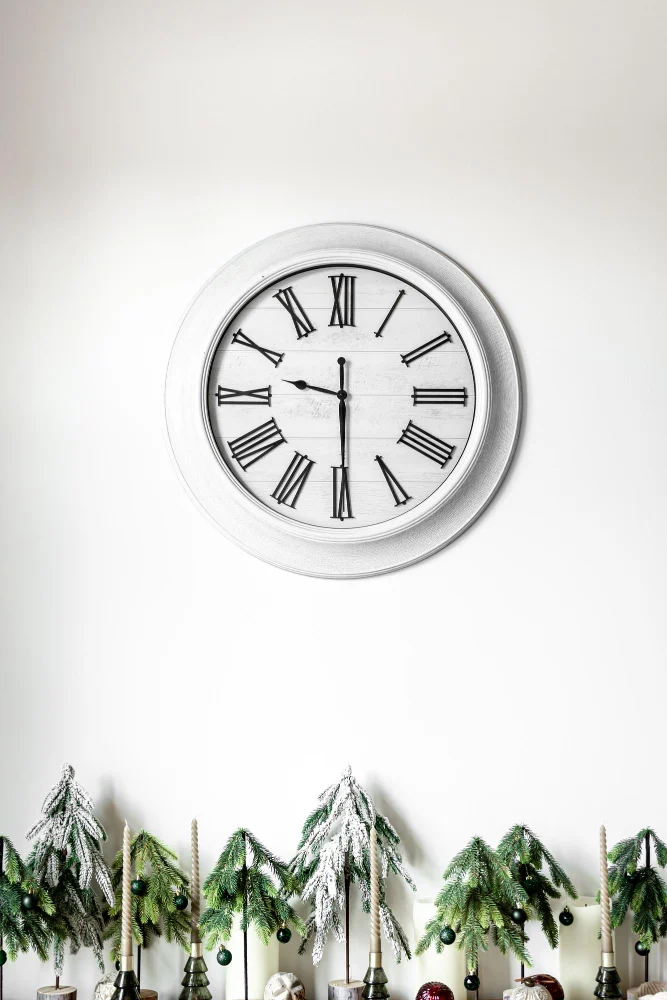

Choosing a kitchen wall clock begins with the wall: where does kettle steam travel during cooking, and where do sink splashes or cooker residue collect? Note the exposure there. Then inspect the plastic dial, metal frame, and exposed hands against the complete assembly’s care instructions, before mounting. A wipeable face cannot answer questions about exposed hands or the battery compartment. Those components need checking before the wall position and material choice are settled.
What Should a Kitchen Wall Clock Dial Withstand?
Separate airborne humidity from direct steam
Does steam from the kettle or an uncovered pan reach the proposed wall? The proposed clock position may sit outside that path, even in a busy kitchen. Look at the wall itself: visible moisture on the paint or nearby cabinet fronts calls for another location. Write that observation beside the material specification before ordering. Record samples’ wall conditions, so a difference in dial durability between locations is not attributed to material alone.
Consider grease and routine cleaning together
Check the permitted method for removing cooking residue from exposed surfaces. Can a cloth reach the rim without touching the hands? Does the care instruction cover the dial itself or only its cover? Examine those points on a sample. At a raised edge, check whether the cloth can pass around it there. A photograph leaves that uncertain; confirm the cleaning method before selecting a cleaner.

How Do Plastic and PP Clock Dials Compare?
Check what the material description actually identifies
“Plastic clock” and “PP face” describe different levels of detail. The SZZ0130 Modern Minimalist Decorative Wall Clock for Home Office makes the component split explicit: PP face, metal frame, and metal hands. The clock has clear numbers and a 30 cm (11.8 in) diameter. SZZ0130’s stated settings are the home, office, and living room; kitchen suitability and humidity resistance are not specified. PP generally has low water absorption, but that property cannot establish the kitchen humidity rating or overall moisture protection of the assembled clock.
Look beyond the face to edges and legibility
A plastic face can be practical to inspect, yet printing, joints, and the battery compartment still need attention. Our SZZ0099 Modern Minimalist Plastic Silent Wall Clock is a plastic clock incorporating a numberless dial with subtle hour indicators. Allow for its 4 cm thickness when checking mounting clearance; the clock’s diameter is 30 cm. Living rooms, bedrooms, offices, and studies are its stated settings. Kitchen placement and a humidity rating remain unspecified for SZZ0099. The plastic description does not identify the specific dial polymer.
Is a Metal Dial or Frame Right for a Humid Kitchen?
Distinguish a metal clock from a specified metal dial
The SZZ0098 Modern Metal Wall Clock Silent Non-Ticking Decor is a metal wall clock with a simple frame and clear numbering. Kitchen use is specified alongside living room, bedroom, and office use. No dial alloy, coating, water resistance, or corrosion rating is specified. For a wall receiving direct steam or splashing, those questions remain unresolved. A metal label leaves individual component materials and finishes unconfirmed.
Inspect finishes and exposed parts
Compare the specified material and finish on the face with those on the frame, then check the hands and fasteners. For every surface needing wiping, including edges, obtain the cleaning instructions. For SZZ0130, SANGNI specifies a PP face together with a metal frame and metal hands. That construction is distinct from a fully metal face. A reply covering the frame still leaves the dial and hands unresolved. Ask about their materials and finishes separately, including any other parts exposed during cleaning.
Where Should a Wall Clock Go in a Kitchen?
Choose a readable wall away from the wettest activity
From the preparation counter, dining area, and kitchen entrance, look toward each candidate wall. Check where steam, splashes, and heat reach during normal use. Remove those positions from consideration before comparing visibility from the remaining walls. With the cupboard doors open for cooking, check whether the clock would disappear behind a door. Check the fixing and battery access together: will replacement remain possible once the clock is securely mounted here? This leaves a practical position without requiring installation above the kettle or stove.

Match dial contrast to viewing distance
Compare SZZ0098’s clear numbering with the subtle hour indicators on SZZ0099’s numberless dial from the preparation area, with the normal kitchen lighting on. When the time becomes readable only after stepping closer, try another position or compare the other dial. Repeat the comparison from the work areas used by other kitchen users. The close view used for inspecting the surface gives no answer about reading across the kitchen.
What Should Buyers Confirm Before Ordering?
Request construction and care details
Ask about the dial separately from the frame. Under each, leave room for a reply on cleaning, printed markings, the face covering, and movement enclosure wherever details remain unconfirmed. For a regularly steamy kitchen, include the intended location and ask whether those conditions are permitted. Kitchen use is one of SZZ0098’s stated settings at SANGNI. Then ask about direct steam and splashing; neither exposure has an established limit here.
Compare samples against the real room
Use the 30 cm diameter to check the space available on the chosen wall, then read the sample from the work area. Can the battery compartment be reached there? Can each exposed surface needing cleaning be accessed without shifting the installation? These checks give the catalog dimensions a practical context. For several kitchens, record each proposed wall with its nearby cooking moisture sources. Keep the dry locations separate from those needing a different position or a clock with documented environmental protection before ordering.
FAQ
Q: What is the best dial material for a kitchen wall clock?
A: Start with the cleaning that wall requires, then check the face material and finish. Steam reaching that wall and residue are the observations to check against the care instructions. Where steam reaches the clock directly, relocate it or obtain environmental guidance.
Q: Can a plastic wall clock be used in a humid kitchen?
A: Check the permitted environment before choosing the kitchen mounting location. Plastic leaves questions about the dial, movement, and permitted cleaning unresolved. The supplier’s reply needs to cover direct steam and splashes explicitly before either exposure is accepted for the chosen position.
Q: Is a metal wall clock suitable for a kitchen?
A: Kitchen suitability leaves the alloy, finish, and moisture limits to confirm. Include the sink, hob, and kettle locations in the inquiry: the reply should address exposure at the mounting point, beyond general kitchen use.
Q: Where should a kitchen wall clock be hung to avoid steam?
A: Watch the wall during normal cooking before fixing the mounting point. Select a secure, visible spot beyond cooking steam and splashes; exclude any wall where steam crosses or nearby surfaces show condensation.
Q: How should a kitchen wall clock dial be cleaned?
A: Read the care instructions beside the sample. Identify whether they cover its exposed dial or its cover before choosing cleaners. Remove dust gently; keep water and spray clear of the hands, joints, and movement.