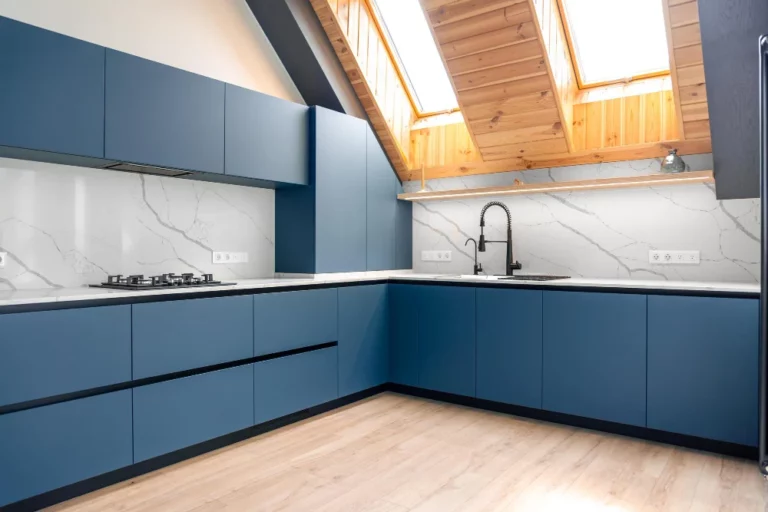

The board itself is rarely the difficult part. The real work is deciding where cuts will fall, whether a joint crosses a doorway or outlet, and what quantity remains after those decisions. A quick elevation drawing can save a surprising amount of trimming later.
How to Read UV Board Sizes Before Ordering
UV Board is a broad product term, so the printed size is only the first line of the specification. Check it alongside the core, surface, and fixing method. UV boards are described as extruded WPC boards with a surface laminated with materials such as PVC film, PP scratch-resistant film, or PET-G high-gloss film. A UV layer may be made by applying liquid resin and curing it quickly with ultraviolet light to form a transparent protective film. That is why boards with similar names can still differ in cutting behavior and installation feel.
Related wall-panel products may use WPC, PVC, MDF, or PS constructions and may be described as waterproof, formaldehyde-free, free from heavy metals, or insect-resistant. Those terms belong to the exact product specification, not to the broad UV Board label.
Match Panel Dimensions to Wall Geometry
Start with the wall, not the carton. Take several height and width readings, then mark every door, window, outlet, switch, column, and fixed cabinet. Use the exposed face after tongue, groove, overlap, and trim allowances; nominal width alone .can understate the order quantity.
For a vertical feature wall, compare the clear wall height with the panel length and decide early whether a horizontal joint is acceptable. For a low wainscoted area, compare the board width with the intended panel height, skirting, and cap trim. The Premium PS 3D Wall Panel S10057 is listed at 10 mm x 100 mm x 2.9 m with 20 pieces per carton. Its narrow face suits repeated vertical lines, but the final count still depends on the wall width and the layout at each end. See the Premium PS 3D Wall Panel S10057 size and finish details before using a nominal dimension in a takeoff.
The S10057 format is intended for residential interiors, offices, hotels, and other commercial spaces.
Calculate Coverage Around Openings
Net area is useful for a first pass, not for the final order. Subtract large openings and note the offcuts they produce. A piece around a socket may not reach a corner, whereas a longer strip may finish a return.
Draw one elevation for each wall. Mark the first full panel, the last strip, and every opening. Count actual cuts rather than adding an unexplained waste percentage, then confirm usable width, carton quantity, and cutting guidance with the supplier.
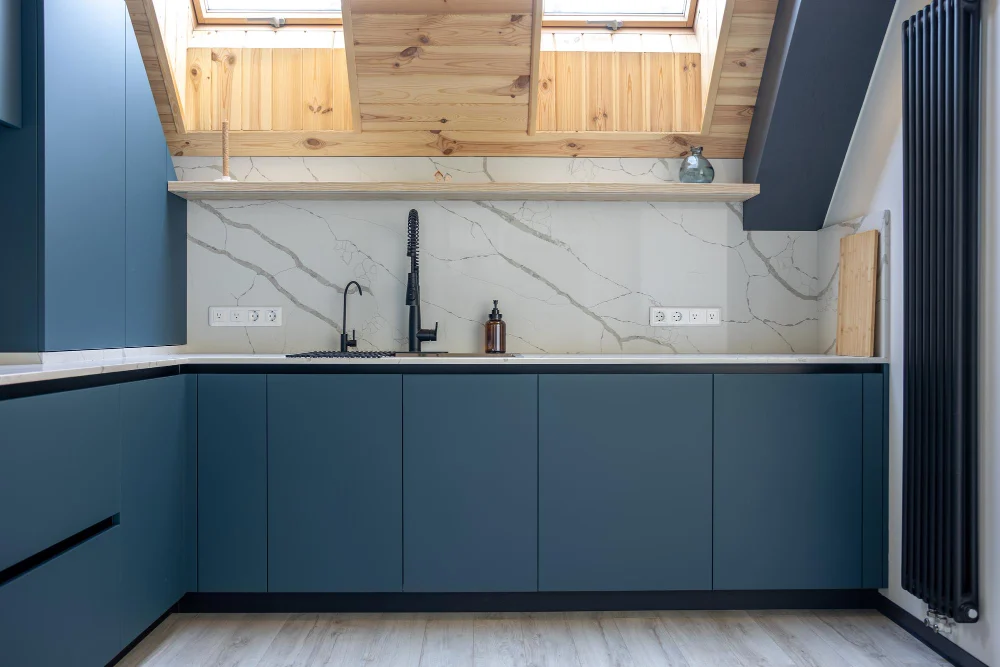
Standard Panel Dimensions and Layout Options
There is no universal best UV Board size. A long board may remove a horizontal joint, but a shorter module can be easier to carry and easier to stop around switches. Let the wall, access route, and finish decide.
Full-Height Panels
When the panel length is close to the finished height, a full-height run can keep horizontal joints out of the main sightline. Measure the actual start and stop points, including trim and shadow gaps. Record high and low readings where the floor or ceiling is uneven.
Full-height panels still need a vertical-joint plan. Two balanced edge cuts usually look better than a thin leftover strip. If a cabinet or doorway interrupts the wall, check the layout from the room entrance before choosing the first panel.
Modular Layouts for Wide Walls
Modular boards create a predictable rhythm on wide walls. The S10051 Modern 3D Wall Panel is listed at 7 mm x 988 mm x 2.9 m, with 40 pieces per carton and several surface effects. It is described as waterproof, paintable, formaldehyde-free, and free from heavy metals. Its available finishes include Wood Effect, Morandi Color, Metallic Effect, Fabric Effect, Marble Color, and Concrete Effect. Review the S10051 Modern 3D Wall Panel dimensions and finish options when comparing formats.
Keep neighboring walls related unless a transition is intentional. On a main wall, a centered panel can create two useful edge cuts instead of one awkward end. Walk through an open-plan room and check the view from more than one direction.
SANGNI’s wall-panel range covers building-supply formats for residential and commercial interiors. We can help coordinate product selection, packaging, and logistics when one project needs consistent panels across several rooms.
How to Plan Seams for a Cleaner Finish
Seams are not automatically a defect. They draw attention when the spacing feels accidental or when a joint lands beside a focal object. Put the joint map on the elevation before the boards arrive.
Place Seams Where They Are Least Visible
Furniture, door casings, wall returns, and lighting breaks can all hide a joint. A seam behind a tall cabinet may disappear, while one beside a wall light may stand out.
At an outside corner, decide on trim, a wrapped edge, or a reveal before cutting. At an inside corner, leave some tolerance for walls that are not perfectly square.
Coordinate Pattern Direction
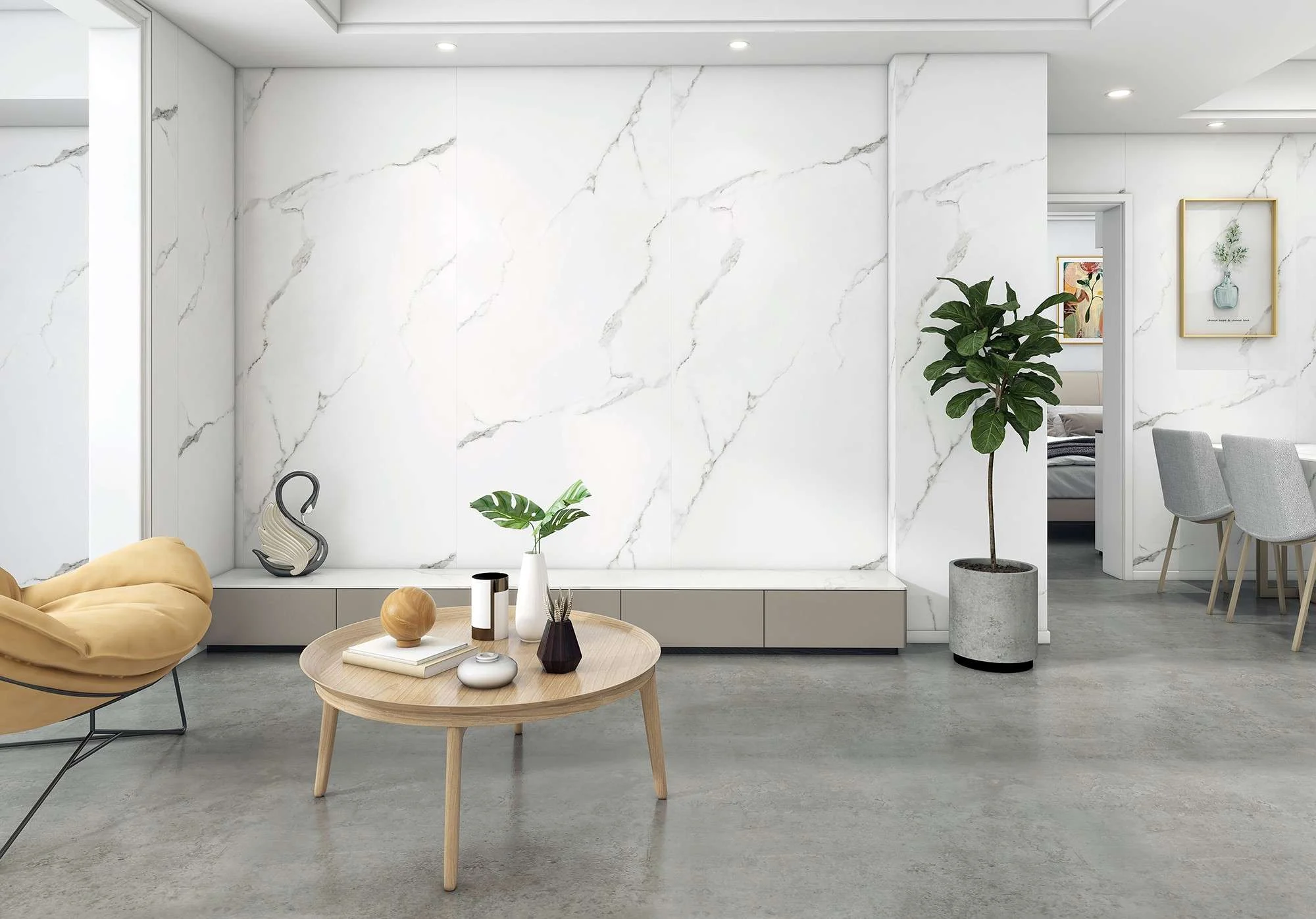
Marble, wood, and linear textures deserve a dry layout before the adhesive is applied. Decide whether veins meet, alternate, or stop at a corner, and mark the direction on the back. The SANGNI wall panel collection shows why finish, texture, and panel format should be considered together rather than as separate purchasing decisions.
Before cutting, lay the boards out in sequence and mark the back with a simple position code. PS wall panels are also described as suitable for bedrooms, living-room TV walls, kitchen islands, ceilings, and corner designs, with quick installation. Protect the finished face while cutting; a clean work surface matters because grit can mark a glossy film.
Installation Checks That Protect the Finished Wall
Good dimensions cannot rescue a poor substrate. Surface preparation and finishing details matter just as much as the takeoff.
Prepare the Substrate
The wall should be stable, clean, dry, and flat enough for the fixing method. Remove loose paint, repair deep defects, and check the wall for damp first. An out-of-plane wall may need leveling, a support frame, or another fixing system.
Let the boards sit in the installation environment long enough to reduce surprises from temperature and humidity. Follow instructions for adhesive, fixing, ventilation, and curing. A decorative panel is not a fire-rated assembly or a cure for active dampness.
For reference, the PS wall-panel guidance describes common panels as waterproof, easy to install, formaldehyde-free, free from heavy metals, and resistant to insect damage. These are product-level descriptions, so confirm that the exact UV Board construction and finish carry the same claims before using them in a specification.
Plan Corners, Outlets, and Trims
Prepare the cutting schedule before opening cartons. Mark outlets and switches, choose compatible trims, and dry-fit difficult pieces before fixing.
Measure, draw, dry-fit, label, cut, and fix. That order keeps UV Board sizing tied to the actual wall.
FAQ
Q: What UV Board size is best for an interior wall?
A: Choose the size that fits the wall height, limits awkward offcuts, and puts joints where you expect them. Compare usable face width with the wall elevation, not carton area alone.
Q: How do I calculate how many UV Boards I need?
A: Measure each wall, subtract major openings, divide by usable coverage, and allow for corners, outlets, pattern matching, and damaged cuts. Check the carton quantity before ordering.
Q: Should UV Board seams be visible?
A: It can be visible if it looks deliberate. Place joints at architectural breaks, keep spacing steady, and carry marble or wood direction through the layout.
Q: Can UV Board be used on any interior wall?
A: That depends on construction, substrate, fixing method, moisture, and local requirements. Follow the product instructions, and do not substitute a decorative panel for a required fire-rated or structural system.
Q: Is a larger UV Board always better?
A: No. They can reduce joints, but they may be difficult to carry or cut around openings. The right choice balances appearance, handling, transport, and wall geometry.