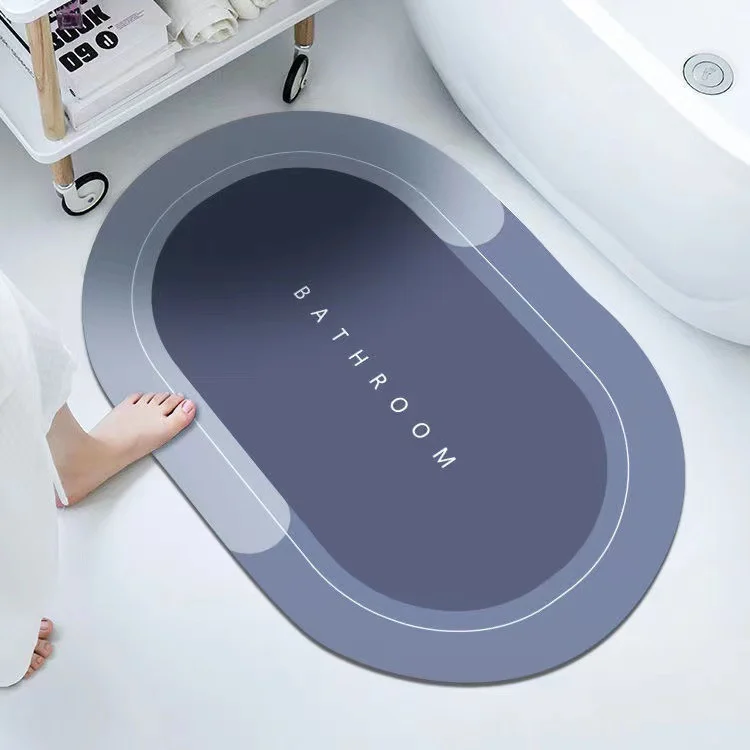

Choosing the best bathroom mat material is about matching absorbency, drying recovery, softness, cleaning, and backing to the bathroom. Diatomite, cotton, and microfiber can all work, but they solve different problems. A humid shared bathroom needs fast drying, while a family bathroom may need washable comfort and a stable underside.
Bathroom Mat Materials at a Glance: Diatomite vs Cotton vs Microfiber
A diatomite bathroom mat is not always the same form. Some are rigid mineral boards. Others, such as flexible diatom mud mats, combine a moisture-managing surface with a softer structure and backing. Cotton and microfiber stay closer to textile comfort but need more laundry attention.
How Do Bathroom Mat Materials Handle Water and Drying?
Diatomite Bathroom Mat: Fast Surface Moisture Management
A diatomite bathroom mat is chosen for quick surface moisture management. Water does not sit in a thick textile pile, so the surface can feel ready sooner after a shower. That suits compact, guest, and humid bathrooms.
SANGNI’s SNBathroommats001 Diatom Mud Bathroom Mat is presented with a rubber base for safety, a 40 by 60 cm size, grip, moisture absorption, bathroom safety, and everyday comfort. That supports a flexible diatom mud bathroom mat discussion, not a claim that every diatomite bathroom mat is a hard stone slab.
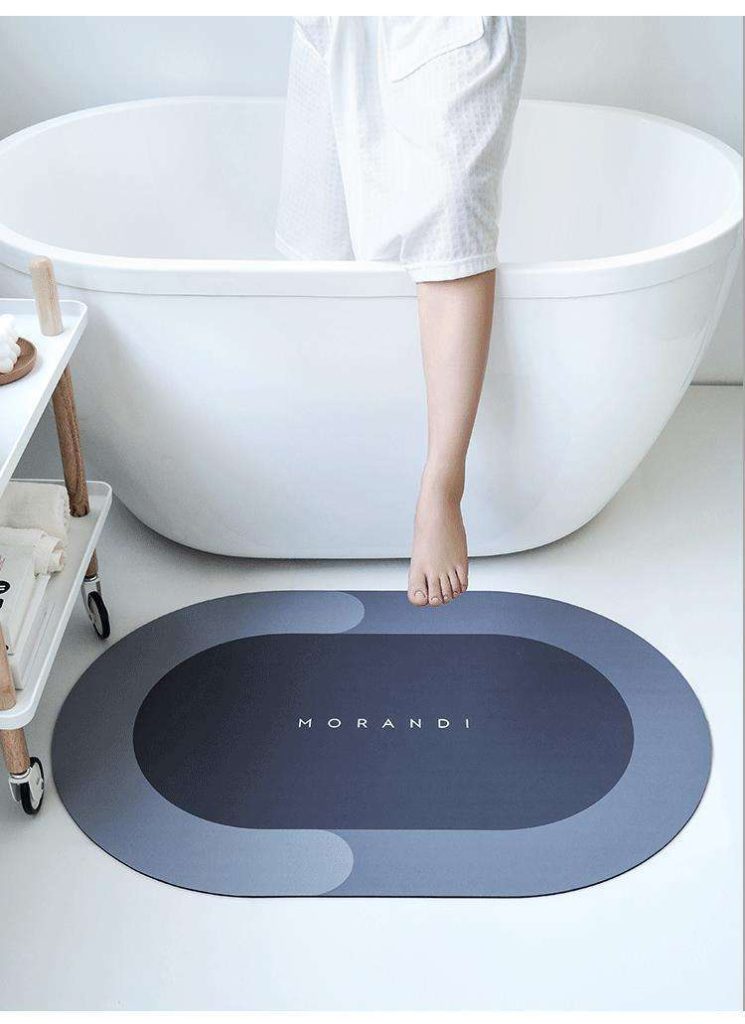
Drying time still depends on structure, humidity, ventilation, and water volume. A quick-drying bathroom mat needs room to release moisture; on a wet floor, even a fast surface recovers slowly.
Cotton Bathroom Mat: High Water Pickup with More Moisture Retention
A cotton bathroom mat absorbs well and feels soft under bare feet. Thick cotton loops can pick up a lot of water, but the tradeoff is moisture retention. Dense cotton may stay damp longer in a humid room, especially after repeated use.
Cotton works best for buyers who value a warm, traditional fabric feel and do not mind regular washing.
Microfiber Bathroom Mat: Fast Wicking with a Lighter Textile Structure
A microfiber bathroom mat uses fine fibers to pull water from the surface and spread it through the pile. It is softer than mineral-style mats, lighter than thick cotton, and often easier to dry.
Pile density, backing, edge stitching, and care instructions matter as much as the microfiber label.
Which Bathroom Mat Feels Better and Stays Safer Underfoot?
How Underfoot Feel Changes Between Mineral and Textile Bathroom Mats
Cotton feels soft, warm, and familiar. Microfiber feels plush and light. Diatomite and diatom mud mats vary by construction. A rigid stone-style mat feels firm and cool. A flexible diatom mud mat feels closer to a thin, resilient mat while still focusing on surface moisture.
For comfort, the best bath mat material depends on the user. Children, older family members, hotel guests, and high-traffic households may judge comfort differently. Compare feel, edge height, floor contact, and wet-use recovery together.
Why Bathroom Mat Backing Matters More Than the Material Name Alone
A non-slip bathroom mat cannot be judged by surface material alone. Rubber or TPR backing, flatness, edge finish, and floor compatibility all influence stability. A soft bathroom mat with poor backing can move; a firm mat on a wet film can also shift.
Check whether the mat lies flat, whether edges curl, and whether backing changes after cleaning. Water film, soap residue, and backing wear reduce stability.
How Do Bathroom Mat Materials Compare for Cleaning and Durability?
Washing Cotton and Microfiber Bathroom Mats
Cotton and microfiber mats are often easier to clean because many textile options are machine washable. Follow the care label. Hot water, bleach, tumble drying, or frequent washing may damage fibers, weaken backing, or curl edges.
Cleaning Diatomite Bathroom Mats Depends on Their Construction
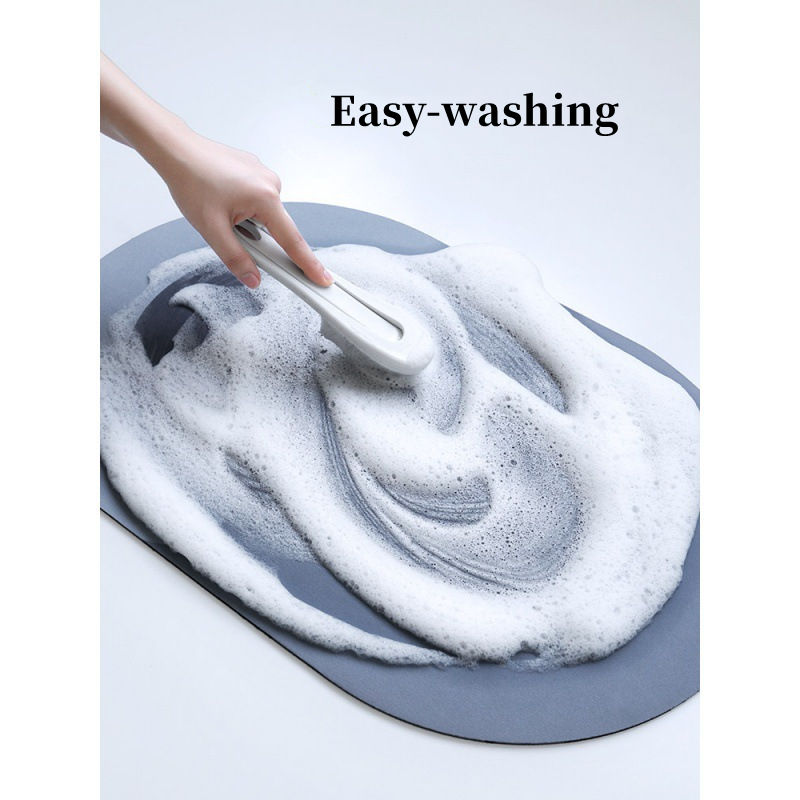
Diatomite care is construction-specific. A hard board and a flexible diatom mud bathroom mat may require different cleaning methods, so it is risky to say all are machine washable or not washable. Some are wiped, aired, or lightly washed by instructions; others need surface maintenance. The SANGNI diatom mud bathroom mat supports moisture absorption, grip, and everyday comfort discussion, but not unlisted care promises.
What Usually Determines Bathroom Mat Service Life?
Service life comes from construction details. Textile mats may shed, flatten, pill, or curl. Backing can crack, harden, or delaminate. Rigid mineral-style mats can wear or break if dropped. Flexible diatom mud mats should be assessed for surface integrity and backing bond.
For repeated purchasing, sample review matters. SANGNI can help sourcing teams compare supplier capabilities, required standards, samples, and prototypes before full-scale production through its product sourcing support.
Which Bathroom Mat Material Fits Different Bathrooms and Buyer Needs?
Shared or Humid Bathrooms: Prioritize Drying Between Uses
In shared or humid bathrooms, drying recovery can matter more than total water capacity. If a bathroom mat absorbs a lot but stays damp for hours, the next user gets a worse experience. Diatomite and lighter microfiber often suit this problem better than thick cotton when airflow is adequate.
Family Bathrooms: Balance Softness, Washability, and Daily Maintenance
Family bathrooms need softness, washability, and drying speed. Cotton and microfiber lean toward textile comfort. Microfiber may suit frequent washing, while cotton offers a classic feel. Diatomite or diatom mud mats suit users who prefer fast surface drying and a thinner profile.
Retail and Hospitality Buyers: Compare the Complete Bathroom Mat Construction
Retailers, hotels, and bulk buyers should compare complete bathroom mat construction instead of choosing by material name alone. Checks include material, thickness, size, backing, edges, wash care, packaging, and batch consistency. SANGNI’s quality control and logistics support can include pre-production verification, in-process checks, final product evaluation, packaging review, loading oversight, third-party laboratory testing coordination, packaging design, warehousing, and international logistics through its quality control and assurance service.
Our sourcing and quality coordination can keep material choice, backing, wash-care needs, packaging, warehousing, shipping, and after-sales support in one purchasing conversation, helping teams compare bathroom mat options by application requirements rather than material names alone.
FAQ
Q: Which bathroom mat material dries the fastest after a shower?
A: Diatomite and diatom mud bathroom mat designs often handle surface moisture the quickest. But the real bathroom mat drying time depends on its build. It also depends on humidity levels, airflow, and the amount of water that reaches the mat.
Q: Is a diatomite bathroom mat better than a cotton bathroom mat?
A: It depends on the bathroom. A diatomite bathroom mat can perform better for quick surface drying. A cotton bathroom mat works better for people who prefer a soft, warm fabric feel. It also suits those who want easy regular washing.
Q: Is a microfiber bathroom mat more absorbent than a cotton bathroom mat?
A: This is not always true. Cotton can absorb a large amount of water. This happens especially in thick piles. Microfiber usually draws and distributes water well. As a result, it may dry quicker. This can occur even when overall absorbency is lower.
Q: How often should a bathroom mat be washed or cleaned?
A: Follow the care label. Also consider how often the bathroom is used. Shared bathrooms or those with high humidity usually require more frequent cleaning and airing. This is compared to low-use guest bathrooms.
Q: Which bathroom mat material works best in a humid bathroom?
A: A fast-drying bathroom mat is often the better choice in a humid bathroom. Diatomite, diatom mud, or lighter microfiber styles usually recover more quickly between uses. They recover faster than thick cotton.