

Choosing a kitchen knife is not a contest to find the hardest or most decorative blade. The right material depends on what you prepare. It depends on how you sharpen. It also depends on how much maintenance you will perform. Home cooks may prioritize corrosion resistance. Enthusiasts may accept extra care for a finer edge. Commercial buyers need consistent specifications.
To compare kitchen knife blade materials in 2026, follow a sequence. You need to understand the trade-offs. Then compare the material families. After that, separate construction claims from cutting performance. Finally, match the blade steel to the user.
What Performance Differences Do Kitchen Knife Blade Materials Create?
Sharpness and edge retention answer different questions
Sharpness describes how well an edge cuts. Edge retention describes how long it stays useful. Wear-resistant alloys usually retain an edge longer. Yet they require more effort to resharpen. A thin and well-ground blade may cut better than a harder blade with thick geometry. So alloy name alone cannot predict performance.
Hardness must remain balanced with toughness
Hardness helps an edge resist deformation. Toughness helps it survive impact and lateral pressure. Higher hardness can support a stable edge. But it may increase chipping risk when paired with inappropriate geometry. Rockwell hardness is expressed as HRC. It is meaningful only alongside heat treatment, blade thickness, edge angle, and intended task.
Corrosion resistance determines the care routine
Water, salt, and acidic ingredients can attack reactive steel. Chromium improves resistance. Yet “stainless” does not mean stain-proof. Every kitchen knife benefits from hand washing, prompt drying, and protected storage. Material choice determines how quickly neglect becomes visible. It does not decide whether care is necessary.
Which Kitchen Knife Blade Materials Are Worth Considering in 2026?
Stainless steel suits cooks who value easier maintenance
Stainless steel covers many martensitic cutlery alloys. It usually offers better corrosion resistance. It also offers easier care than corrosion-prone carbon steel. Edge retention varies by grade and heat treatment. The best stainless steel for kitchen knives is a correctly processed grade with geometry suited to its work.
Carbon steel rewards attentive users
Carbon steel can take a keen edge. It is often responsive during sharpening. Its trade-off is reactivity. Moisture and acidic foods can cause discoloration and rust. A patina is not a substitute for drying. When comparing a carbon steel vs stainless steel kitchen knife, weigh the additional care against the preferred edge characteristics.
High-carbon stainless steel offers a useful middle ground
“High Carbon Stainless” is a category term. It is not a full specification. The right alloy could have good hardness along with good corrosion resistance properties compared to normal carbon steel. Buyers still need to specify the actual grade and hardness required. A high-carbon stainless steel knife could be a good all-rounder.
Ceramic and coated blades serve narrower needs
Ceramic blades are usually zirconia. They are light. They resist corrosion. They retain an edge during careful slicing. But they can chip when twisted, dropped, or used on bones or frozen food. Titanium is uncommon as a chef’s blade material. Titanium nitride is more often a steel coating. In a ceramic vs steel kitchen knife comparison, steel is the more versatile primary tool.
Does Damascus Steel Make a Better Kitchen Knife?
Is Damascus a material or a construction method?
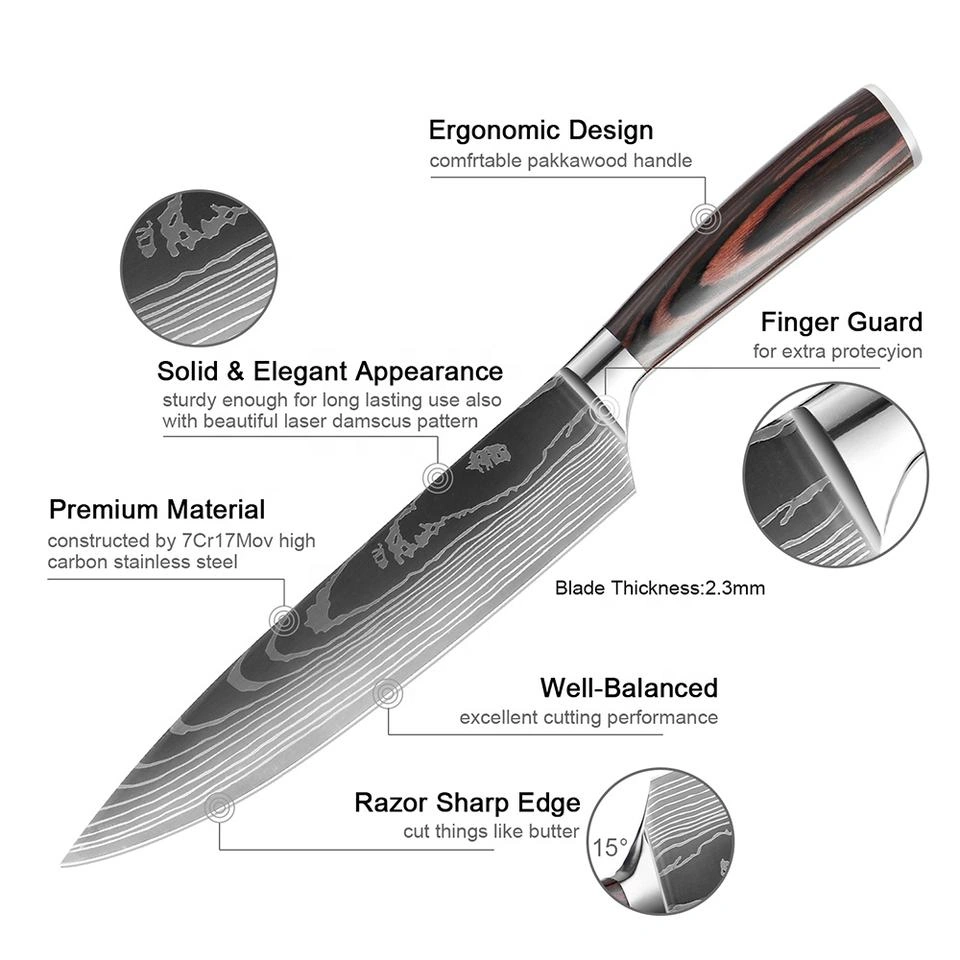
Most modern Damascus blades use pattern-welded layers or patterned cladding around a cutting core. Visible waves do not identify the core alloy, hardness, or heat treatment. A Damascus steel kitchen knife must be assessed through its cutting steel and specifications rather than pattern or layer count.
How do monosteel and clad blades differ?
A monosteel blade uses one principal steel through most of the blade. A clad blade places a harder cutting core between tougher or more corrosion-resistant outer layers. San Mai is a common three-layer version. Neither construction is automatically better. Execution and material compatibility determine the result.
Why do geometry and heat treatment matter more than the pattern?
Heat treatment establishes hardness and microstructure. Grinding determines thickness behind the edge. These factors influence cutting resistance, edge stability, and sharpening. So two blades made from the same alloy can perform differently. Damascus styling cannot compensate for inconsistent heat treatment or inappropriate geometry.
Which Kitchen Knife Material Fits the Way You Cook?
What works best for low-maintenance everyday cooking?
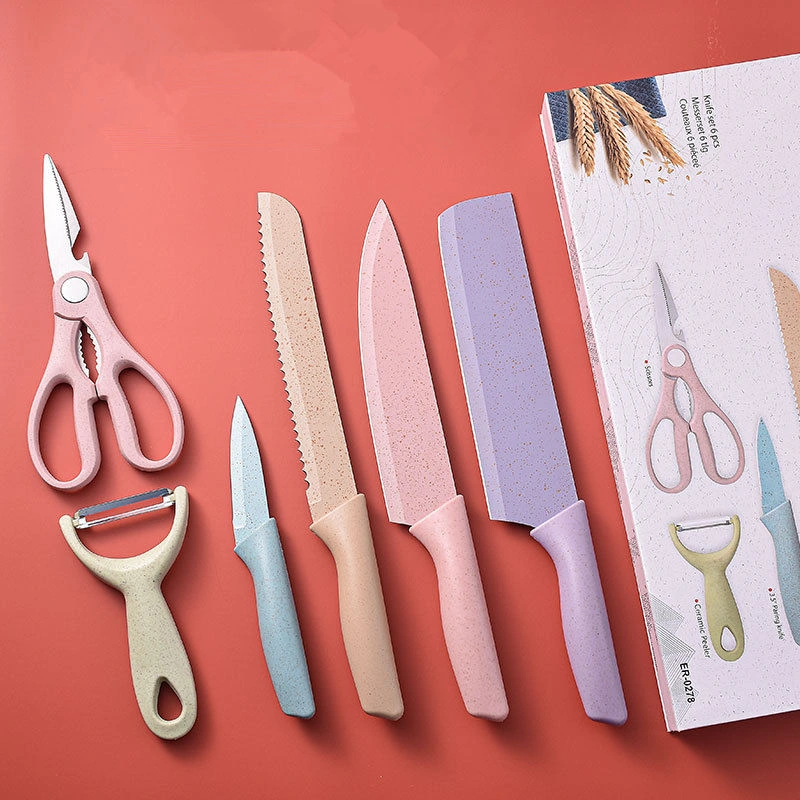
For vegetables, herbs, fruit, and boneless proteins, a corrosion-resistant stainless blade provides a practical balance of versatility and care. Buyers should still look for a stated grade rather than a generic steel claim. One accessible example is the SANGNI SNKnives-019 6-piece kitchen knife set, which uses 3Cr13 stainless blades and PP handles. Its blades should be hand-washed and kept dry.
When is longer edge life worth additional care?
Cooks who value a finer edge or longer intervals between sharpening may prefer higher-hardness stainless, high-carbon stainless, or carbon steel. This depends on their tolerance for corrosion care and more demanding sharpening. A coordinated set can also provide appropriate blade shapes without changing material systems. Later in that decision process, the SANGNI SNKnives-017 10-piece kitchen knife set is a relevant high-carbon stainless option. It uses 5Cr15MoV blades and wooden handles with dry-storage care instructions.
What should high-volume and private-label buyers prioritize?
For frequent use, the most exotic alloy is not always the most practical. Buyers should prioritize an appropriate balance of corrosion resistance, edge retention, toughness, and resharpening time. They should also consider the available cutting boards, staff technique, cleaning process, and access to sharpening equipment. This task-first approach provides a stronger answer to how to choose a kitchen knife blade material than selecting the most impressive steel name.
How Can Buyers Verify Kitchen Knife Material Claims Before Ordering?
Which specifications should the supplier provide?
Request the exact alloy, target HRC range, blade construction, thickness, edge angle, surface finish or coating, handle material, and maintenance instructions. When a Damascus pattern is advertised, clarify whether it is pattern-welded, clad, etched, laser-marked, or otherwise decorative. A complete specification makes products comparable. It also establishes an objective reference for later inspection.
What should sampling and batch inspections test?
Samples should be checked for cutting consistency, edge defects, corrosion after the intended cleaning routine, handle security, balance, and sharpening response. For a set, test each blade type. Do not assume one knife represents the entire collection. Pre-production approval, in-process checks, and final inspection should then confirm that materials, dimensions, finish, labeling, and packaging remain consistent across the order.
When can a procurement agent simplify the process?
Coordinating supplier research, samples, specifications, inspections, packaging, and shipping can be more difficult than choosing the alloy. Every approved detail must remain traceable through production and delivery. At SANGNI, we act as a China-based procurement agent rather than the designer of these products. Through our product sourcing service, we help buyers identify suppliers, confirm requirements, coordinate samples, manage quality checks, and organize logistics. Our role is to make kitchenware purchasing clearer and more controllable from inquiry to delivery.
FAQ
Q: What is the best kitchen knife blade material for home cooks?
A: From a home cook’s perspective, heat-treated stainless steel or high-carbon stainless steel provides an ideal balance between rust resistance, edge-holding, and affordability. Heat treatment and geometry matter more than picking the latest alloy trend.
Q: What HRC is good for a kitchen knife?
A: Many general-purpose kitchen knives fall roughly between the mid-50s and low-60s HRC. But there is no universally ideal number. Lower hardness may provide easier sharpening and greater tolerance of impact. Higher hardness can support a finer edge. But it demands suitable geometry and careful use.
Q: Does a Damascus kitchen knife need special care?
A: Care depends on the steels used in the core and outer layers. Stainless Damascus may be relatively corrosion-resistant. Carbon-steel Damascus can react more readily. Hand-wash the knife. Dry it immediately. Follow the supplier’s instructions. Do not assume the visible pattern determines maintenance.
Q: Are coated kitchen knife blades safe for food preparation?
A: A coating should have documented suitability for food contact in the destination market. It should remain stable under its intended cleaning and cutting conditions. Buyers should confirm the coating material, compliance records, adhesion, and care instructions. They should not rely on color or a non-stick claim.
Q: How often should a kitchen knife be sharpened?
A: Sharpen it when cutting performance declines. Do not follow a fixed calendar. Frequency depends on steel, hardness, edge angle, cutting board, technique, and use. Honing may realign some steel edges between sharpenings. Ceramic blades normally require specialist sharpening equipmen