
A coffee table sits near snacks, children’s hands, and daily items. Yet “natural,” “green,” and even “solid wood” do not describe its core, glue, finish, hardware, or protective pads.
The best non-toxic coffee table comes with verified materials and emissions data. It has a shape that fits the room. It also has a useful finish. The aim is to reduce exposure based on facts. It is not a promise of zero risk.
What Makes a Coffee Table Non-Toxic?
Why Is the Surface Material Only the Starting Point?
Begin with the full material system. Solid wood may still use glue, stain, lacquer, or filler. Glass and metal are low-emitting bases. But painted frames and bonded tops add coatings or adhesives. A credible, non-toxic coffee table for living room use should account for every layer. It should not focus only on the named tabletop.
“Non-toxic” needs proof. It is not a standard furniture grade. Good listings name the wood or panel, finish, adhesive, and relevant tests. Low odor alone does not prove low emissions.
Which Parts of a Coffee Table Can Affect Indoor Air?
The main variables are glue, stain, paint, lacquer, sealer, and edge treatment. For a low-VOC coffee table, coating content and finished-table emissions are different measurements. Water-based, plant-oil, and hardwax finishes work well. But their ingredients and curing instructions must be clear. A table packed before it fully cures may keep releasing odor and emissions inside the room.
Quantity and location matter too. A small bonded joint differs from a large exposed panel. An unfinished underside may behave differently from a cured top. The documentation section below explains how to verify related claims.
What Are the Safest Coffee Table Materials for a Living Room?
Is a Solid Wood Non-Toxic Coffee Table the Best Choice?
A solid wood, non-toxic coffee table offers visible grain and a refinishable surface. Ask for species, moisture control, joinery, glue locations, and finish. Rounded corners suit active rooms. Oil-finished tops may be easier to spot-repair. Check underneath for concealed panels or exposed glue lines. Expect prompt spill cleanup and occasional refinishing.
Are Glass and Metal Non-Toxic Coffee Table Materials?
Glass reflects light and helps a compact room feel open. Metal provides a slim frame. For a modern eco-friendly coffee table, confirm the glass specification, edge treatment, frame coating, welding, feet, and top-to-base adhesive. Fingerprints are the practical compromise.
Can an MDF Coffee Table Be Low Formaldehyde?
Engineered panels offer consistent shapes and accessible prices. But their core and adhesive require scrutiny. A low formaldehyde coffee table made with MDF needs traceable panel information, applicable labels, and a clear finish specification. “Engineered wood” alone is too broad for an informed comparison.
How Do You Choose the Best Non-Toxic Coffee Table for Your Living Room?
Which Non-Toxic Coffee Table for a Small Living Room Saves Space?
In a compact room, start with circulation. Check sofa height. Preserve a clearance. Avoid a top that overwhelms the rug. A built-in slot can replace extra book storage. For a warm and space-conscious direction, the SNCTABLE0003 Modern Box Wood Coffee Table is relevant. Confirm its finish, glue, and market documentation before making any non-toxic claim.
When Is a Glass and Metal Coffee Table the Better Fit?
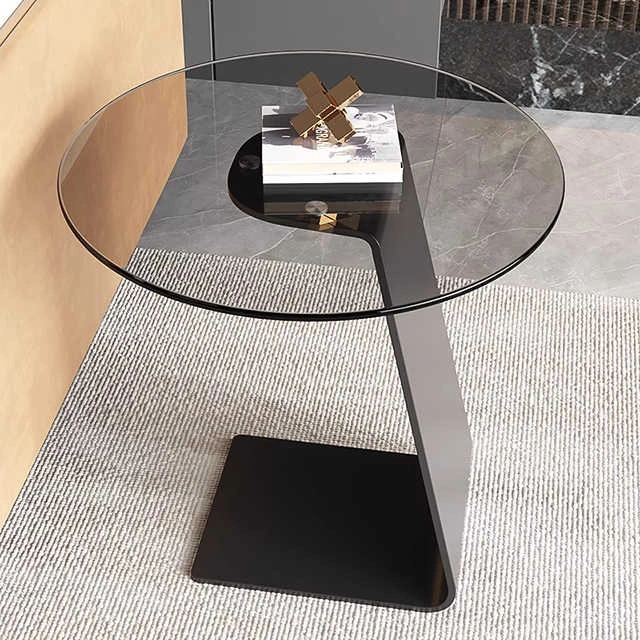
When a sofa and rug feel visually heavy, a transparent top opens the room. A dark base adds definition. Reflective surfaces also let a patterned rug remain visible. They avoid dividing the space into blocks. The SNCTABLE0002 Modern Glass Coffee Table with Black Metal Base illustrates this contrast. Verify the glass, black coating, connection materials, and market-specific packaging protection.
Do You Need a Non-Toxic Coffee Table With Storage?
A storage table can replace an organizer. But hidden compartments add panels, hardware, liners, and finished surfaces. Measure sofa length, seat height, walkways, and drawer clearance before choosing a non-toxic coffee table with storage. Prioritize stable forms for children and repairable surfaces for frequent entertaining.
How Can You Verify Low VOC Coffee Table Claims Before Buying?
Which Certifications Answer Which Safety Questions?
Certifications matter only when their scope matches the claim. FSC addresses forest sourcing, not chemical emissions. TSCA Title VI applies to formaldehyde emissions from regulated composite wood products for the U.S. market. GREENGUARD evaluates chemical emissions from qualifying products and materials. Confirm the factory, model, component, and certificate number.
What Documents Should You Request From a Coffee Table Supplier?
Product and Emissions Documents
Request a bill of materials, panel details, finish and adhesive data sheets, current emissions reports, verifiable certificate numbers, and destination-market labels. “Low VOC” should identify the test method. It should also note whether it covers coating content or the finished item. “Formaldehyde-free” should define no-added formaldehyde, a measured limit, or another stated basis.
Batch and Supplier Traceability Questions
Ask who produced the component and applied the coating. Ask whether the report covers the current model and color. Ask whether the batch is traceable. Retain approved samples and define color, surface, dimensions, odor expectations, and packaging. This establishes a standardized process for choosing a non-toxic coffee table.
How Can SANGNI Support Non-Toxic Coffee Table Sourcing?
Why Use a China Coffee Table Sourcing Agent?
At SANGNI, we act as a China-based procurement agent. We do not claim these tables are designed or manufactured by us. Through our product sourcing service, we connect buyers with vetted suppliers. We clarify requirements, coordinate samples, compare factory documents, and follow production. A request for a Zero-VOC emissions must become verifiable specifications. It must not remain a slogan.
How Are Approved Materials Protected Through Production?
Approval should not end with a sample. Substituted materials, changed coatings, or mixed packaging can separate bulk production from what was approved. We coordinate supplier checks, pre-production confirmation, inspections, packaging review, and logistics. Buyers control the standard.
FAQ
Q: What is the best non-toxic coffee table material?
A: No single material guarantees the safest finished table. Solid wood, glass, and metal are strong starting points. But buyers should also verify glues, coatings, connections, and finished-product emissions.
Q: How can I tell if a non-toxic coffee table is truly low VOC?
A: Ask for the test method, laboratory, tested model, date, and scope. Confirm whether the result covers only the liquid finish or the completed table. Those claims are not interchangeable.
Q: Is a solid wood non-toxic coffee table always safer than MDF?
A: Not automatically. Solid wood may still contain adhesives and solvent-based finishes. MDF requires closer formaldehyde-emission review. But compliant panels with transparent documentation are more credible than an undocumented “natural” table.
Q: What certifications should the best non-toxic coffee table have?
A: GREENGUARD addresses low chemical emissions. TSCA Title VI covers formaldehyde emissions from regulated composite wood products in the U.S. FSC addresses responsible forest sourcing. Each answers a different question.
Q: Where can I source non-toxic coffee tables for a living room collection?
A: Start with a detailed specification covering materials, finishes, emissions, dimensions, and destination-market rules. A procurement agent such as SANGNI can identify suppliers. It can coordinate samples, document checks, quality control, packaging, and shipping