

Why Are High-Quality Kitchen Knives a Key Investment for Restaurants in 2026?
The food business in 2026 deals with major daily hurdles. Rising expenses and a lack of trained workers stand out as the top issues. In this tough setting, tools for professional kitchens go beyond simple items. They serve as vital resources that affect a restaurant’s earnings directly. Setting up a commercial kitchen with top-notch knives forms a basic way to boost back-of-house productivity.
Navigating High Labor Costs with Increased Prep Efficiency
In a busy eatery, time links straight to income. If cooks must use blunt or unbalanced blades, prep times grow a lot. Food waste also rises from sloppy cuts. A well-balanced, sharp blade enables quick and exact chopping and slicing. As a result, it shortens the prep process. Buying smart tools raises what each worker produces. This provides a strong shield against growing staff expenses.
Reducing Chef Fatigue with Modern Ergonomic Designs
The kitchen area proves a tough physical space. Long, repeated cutting actions often cause wrist tiredness. They can even lead to lasting job-related harms. Today’s professional knives include smart designs for comfort. These features have better weight spread and handle shapes that ease ongoing strain. Such features improve the workday for the cooking staff. They also help cut staff quits by focusing on worker health.
Which Essential Kitchen Knives Make Up the Ultimate 2026 Commercial Set?
Faced with an overwhelming variety of specialized tools, purchasing managers can easily overcomplicate their inventory. A highly functional commercial kitchen does not require dozens of overlapping blade types; rather, it relies on a focused core set capable of handling intense, high-frequency tasks.
The 8-Inch to 10-Inch Chef’s Knife: The Universal Workhorse
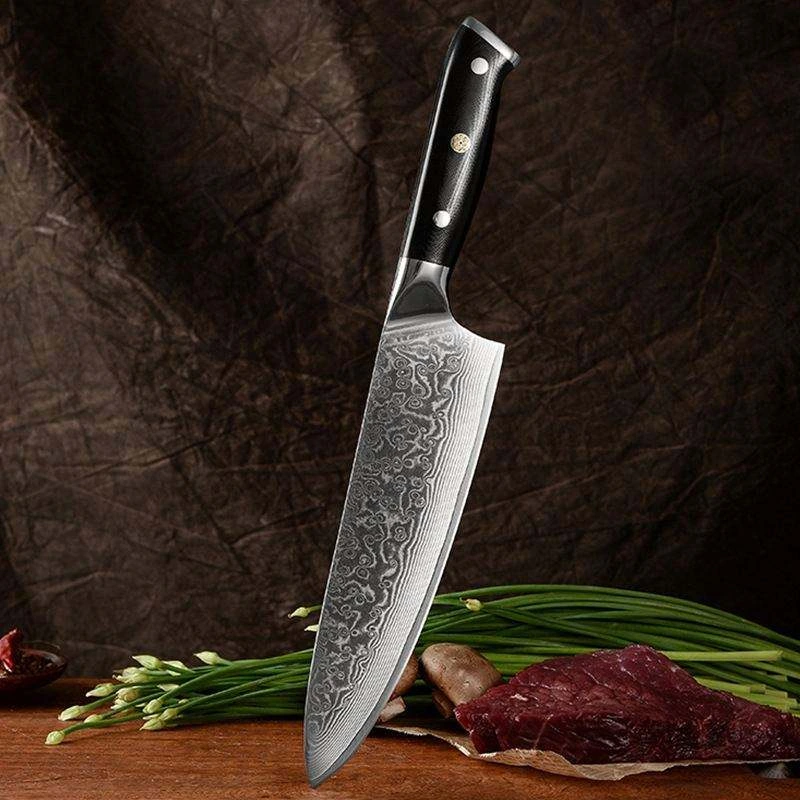
This stands as the main item in any pro prep area. It handles tasks like cutting veggies finely, slicing meats, or smashing garlic. A wide blade with a rounded edge supports the standard rocking cut that pros use for pace. When sourcing equipment for our clients, we frequently procure models like the SANGNI SNKnives-015 Professional 8 Inch Damascus Steel Chef’s Knife with Eco-Friendly G10 Handle. For strict commercial settings, this specific model features a premium high-carbon stainless steel core that resists corrosion, clad in a decorative Damascus pattern for added durability and a professional aesthetic. Instead of standard wood, it utilizes a highly durable, non-porous, and chemical-resistant G10 handle, offering exceptional balance, grip, and universal utility for high-volume prep lines.
The Paring Knife: Mastering Precision and Intricate Cuts
For fine, away-from-board jobs like skinning veggies, cleaning shrimp, or making detailed decor, a small and agile blade is vital. It fills the gaps left by bigger knives. Thus, it keeps the look of fancy plates perfect and polished.
The Heavy-Duty Cleaver: Essential for Meat and Bone Processing
If the menu includes meats with bones or needs splitting, whole birds, a sturdy cleaver is a must. It relies on its sheer weight and a specifically tempered edge, typically heat-treated to an optimal 56 to 58 HRC. This precise balance of hardness and toughness allows it to power through dense cartilage and bone without the edge chipping or rolling under extreme impact.
The Serrated Utility Knife: Handling Breads and Soft Produce
Standard straight edges often crush ingredients with tough exteriors and soft interiors, leading to moisture loss and poor presentation. A serrated edge acts as a micro-saw, easily biting into crusty artisan loaves or smooth-skinned tomatoes, preserving the structural integrity of the food.
How to Evaluate Kitchen Knives for High-Volume Commercial Kitchens?
Sourcing cutlery for a restaurant differs entirely from buying for a home kitchen. Commercial environments demand extreme durability, rapid maintainability, and strict adherence to health codes.
Analyzing Blade Steels for Commercial Durability
The metallurgical composition of the blade dictates its peak performance and operational lifespan on the prep line.
The Rise of High-Carbon Stainless Alloys
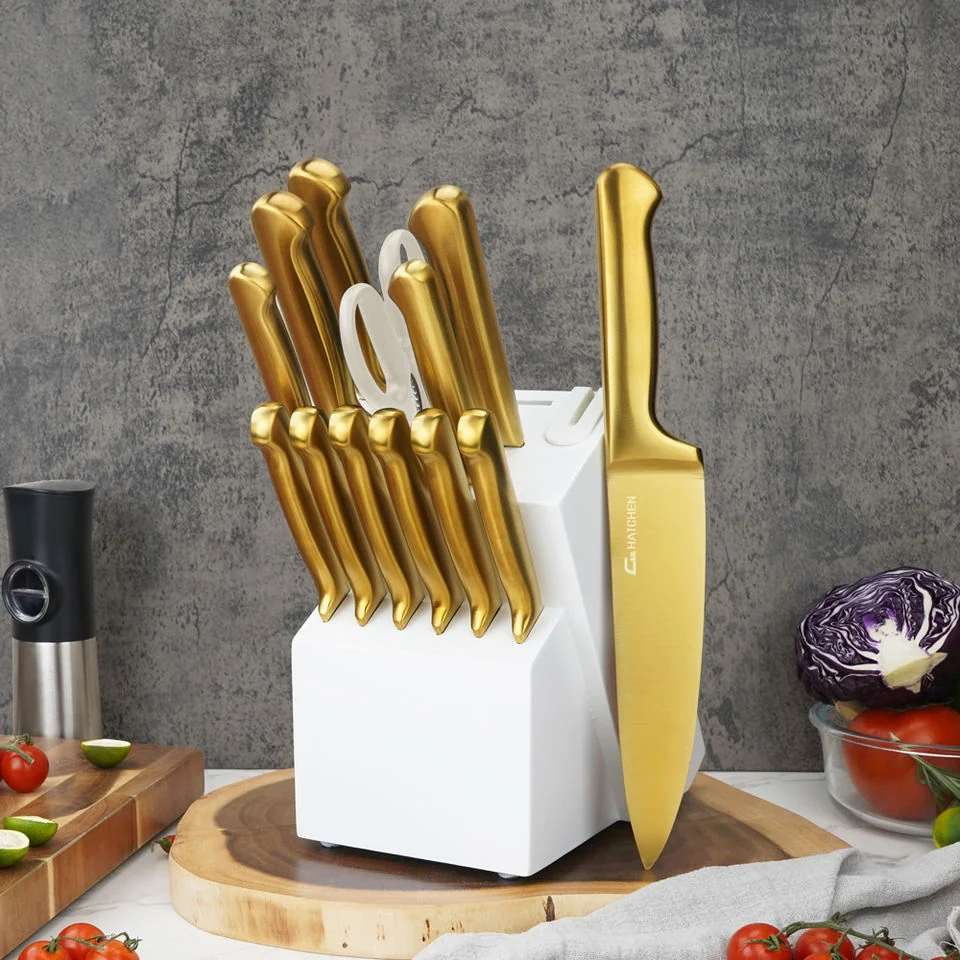
By 2026, high-carbon stainless steel will be the top choice for fine kitchen gear. It blends the keen edge and lasting sharpness of old carbon steel. It also adds protection against rust and marks from stainless types. A clear case of this strong material is the SNKnives-016 New Design 14-Piece High Carbon Stainless Steel Kitchen Chef’s Knife Set with Wooden Knife Rack. As agents, we note big business’s need for full sets like this. These blades utilize high-carbon stainless steel with proper heat treatment, providing an optimal balance of edge retention and high resistance to the corrosive acids and moisture prevalent in busy commercial kitchens.
Edge Retention vs. Ease of Sharpening
Commercial tools require a delicate balance. Ultra-hard boutique steels hold an edge forever but are notoriously difficult and time-consuming to resharpen once they finally dull. For a fast-paced kitchen, a slightly more forgiving steel that takes a new edge quickly on a whetstone is often the more practical choice for daily operations.
FDA-Compliant Materials and Seamless Construction: Prioritizing Grip and Sanitation
Prep spots often get wet with water and fats. Handle parts must offer a firm, non-slip hold in bad conditions. Additionally, seamless injection-molded plastics or dense, non-porous antimicrobial polymers prevent microscopic food particles and dangerous bacteria from penetrating the handle.
Evaluating Total Cost of Ownership (TCO) Over Initial Purchase Price
Wise buyers see past the first cost. A low-price blade that breaks, dulls fast, or holds germs needs frequent swaps. It also slows service. Looking at TCO includes expected life, less upkeep time, and faster prep. This shows that quality pays back more in the long run.
How Can Kitchen Managers Optimize Kitchen Knives Maintenance?
Even the best steel wears out fast without proper care. Set care rules to help get the most from your stock.
Implementing Standardized Honing and Sharpening Schedules
Honing straightens the tiny edge on the metal. It must happen before and after each shift. Sharpening cuts metal to form a new edge. Schedule it by turns based on how busy the spot is. Teach all cooks the right honing ways. This lengthens the whole stock’s life a lot.
Safe Storage Solutions That Prevent Cross-Contamination and Blade Damage
Throwing loose blades in a common drawer causes big problems. It chips edges, dulls points, and risks deep cuts. Require wall-mounted magnetic strips or NSF-certified stainless steel racks in the main prep areas. While comprehensive kits like the SNKnives-016 New Design 14-Piece High Carbon Stainless Steel Kitchen Chef’s Knife Set come with a beautiful wooden knife rack perfectly suited for an executive chef’s private office or a culinary training station, the knives themselves must be transferred to non-porous storage systems on the active commercial prep line to pass rigorous health inspections.
What Should Buyers Look for in a Commercial Kitchen Knives Sourcing Partner?
Dealing with the tricky worldwide supply web to get the right gear can use up key time from a restaurant’s leaders. That’s where we come in. At SANGNI, we serve as your trusted buying helper. We don’t make or create the items. Instead, we use our strong business links and wide maker network to find the precise cutting tools your place needs.
Ensuring Consistent Quality Across Bulk Orders
The main danger in big business buys is uneven quality in one batch. We apply tight checks on suppliers and quality tests before shipping. This makes sure every item you get through us hits the same level of business strength. It works whether you equip one spot or a whole chain.
Customization and Supply Chain Stability in 2026
Global shipping remains uncertain. A steady supply line keeps your work running. SANGNI group shines in handling borders. We make sure your key stock shows up on time. Plus, SANGNI links you to plants that handle special orders. This lets you stick to managing your eatery.
FAQ
Q: What are the absolute essential kitchen knives a new commercial kitchen needs to open?
A: For a new restaurant starting up, the main kit should include a flexible chef’s knife for most cutting jobs. Add a paring knife for close peeling. Include a sturdy cleaver if you process proteins. Get a toothed utility knife for bread and soft items. This simple group handles nearly all basic prep needs.
Q: How frequently should high-volume restaurants sharpen their kitchen knives?
A: Use in business spots wears tools hard. Cooks must hone blades with a steel before each shift to align the edge. Real sharpening on a stone varies by how busy the area is. Often, tools in heavy use need to be sharpened every three to four weeks. This keeps cutting at its best.
Q: Can professional kitchen knives be safely cleaned in industrial restaurant dishwashers?
A: No. The high heat, strong water blasts, and harsh cleaners in business washers harm professional knives badly. This setup speeds up rust and can twist or split handle parts from the blade base. It ruins the knife’s weight and clean state for good.
Q: Are forged kitchen knives functionally superior to stamped ones for restaurant prep work?
A: Not always. Forged knives give more weight and fine balance that many head chefs like. But new manufacturing methods have boosted stamped knives. These weigh less, which cuts wrist tiredness in long prep shifts. They also provide a budget-friendly way to supply a big cooking team.
Q: How can purchasing managers verify the quality of commercial kitchen knives during bulk sourcing?
A: For big orders, check the exact steel type used. Look at the handle-to-blade join for a smooth build. Seek known business clean certifications. Working with a pro sourcing helper cuts these risks. They check makers fully before any order goes through.


