
Your blades are the key to a happy cooking experience versus a frustrating meal preparation experience. Whether you are a serious home cook making daily meals for your family and friends or the manager or buyer of a hospitality business, you need to buy reliable restaurant kitchen knives. And then there is also the maintenance of the blades of your culinary tools.
Why Do Your Kitchen Knives Lose Their Edge So Quickly?
Even the highest-end safety razor blades will inevitably lose their extremely sharp edge. But the blades’ early dulling is rarely caused by the blade’s steel itself. Instead, it’s a result of the way the knife is used on a daily basis, as well as its general exposure.
The Hidden Damage of Dishwashers and Chemical Cleaners
You likely have read that many of our high-quality kitchen knives are “dishwasher safe” – however, many people believe that placing their knives in the dishwasher will not “harm” them. Unfortunately, the environment in a dishwasher is one of the leading causes of dull knives. High heat, extremely powerful water jets, and harsh chemical detergents with extremely high pH levels cause corrosion to the fine edge of a knife. Additionally, the utensils bounce around in the racks and bang into other silverware, causing micro-chips in the blades of your valuable knives. Don’t put your knives in the dishwasher! Hand wash with mild soap and dry immediately.
How Improper Cutting Surfaces Accelerate Blade Dullness
Your cutting board is a crucial factor in the edge retention of your knives. A hard surface, such as glass, marble, ceramic, or granite, has no give whatsoever. This means that the extremely thin edge of a sharp knife will have no chance but to roll and to become flatter with every cut on such a surface. To prevent damage to your very expensive kitchen knives, we recommend using end-grain wood or high-quality plastic cutting boards. These boards are able to absorb impacts in order to protect your knives’ steel.
Honing vs. Sharpening: What Do Your Kitchen Knives Actually Need?
Many people are confused by knife care between honing and sharpening, and when to use each to extend the life of your cutlery.
Honing for Daily Edge Realignment and Maintenance
Even the sharpest knives in the world have microscopic edges. These edges can get bent out of shape through normal use. Sometimes the edge gets so bent that people think their knife has become dull. But the edge is still there – it’s just been folded over. In order to realign the edge of a knife, one uses a honing steel or ceramic hone. The hone pushes the edge of the knife back straight and realigns it. This process does not remove any metal from the blade. In fact, knives should be honed very frequently. In fact, one should hone their kitchen knives before each big cooking session to get the best results from them.
Sharpening for Metal Removal and Structural Restoration
When a blade gets really blunt, honing often fails to bring back its sharp feel. At that point, sharpening becomes necessary. The process removes tiny bits of metal from the edge. It forms a fresh V shape along the cutting line. Material gets taken away during this step. So you should only sharpen from time to time. Heavy users tend to do it every few months.
How to Sharpen Kitchen Knives Safely at Home Using a Whetstone?
While pull-through sharpeners can be convenient, using a whetstone for sharpening is the safest and most effective way to get a blade to cut with a true edge without dulling it by over-sharpening.
Choosing the Right Grit Progression for Your Blade Condition
There are many different grits of whetstones available, some more suitable for your restaurant kitchen knives than others. If your knives are heavily chipped or completely blunt, you will need to start with a coarse grit stone, such as #400 to #1000, to initially reshape the metal. Once you have created a burr, you can progress to a finer grit stone, such as #3000 to #6000, to polish and hone the knife’s edge.
A Step-by-Step Guide to Mastering the Perfect Sharpening Angle
The main thing when using a whetstone to sharpen blades is keeping a steady angle. Most Western-style blades work well with an angle near 15 to 20 degrees. Set the stone on a damp towel so it stays in place. Grip the handle with one hand. Use the fingers of your other hand to press down flat on the blade. This spreads pressure evenly. Draw the blade across the stone in long smooth strokes. Move from the heel to the tip each time. Repeat on both sides at the same angle. Keep going until a small burr forms along the edge.
What Are the Safest Storage Solutions for Premium Kitchen Knives?
Dropping unprotected knives in a crowded drawer can cause damage to their edges as well as inflict serious injury.
Magnetic Strips vs. Knife Blocks: Pros and Cons for Blade Longevity
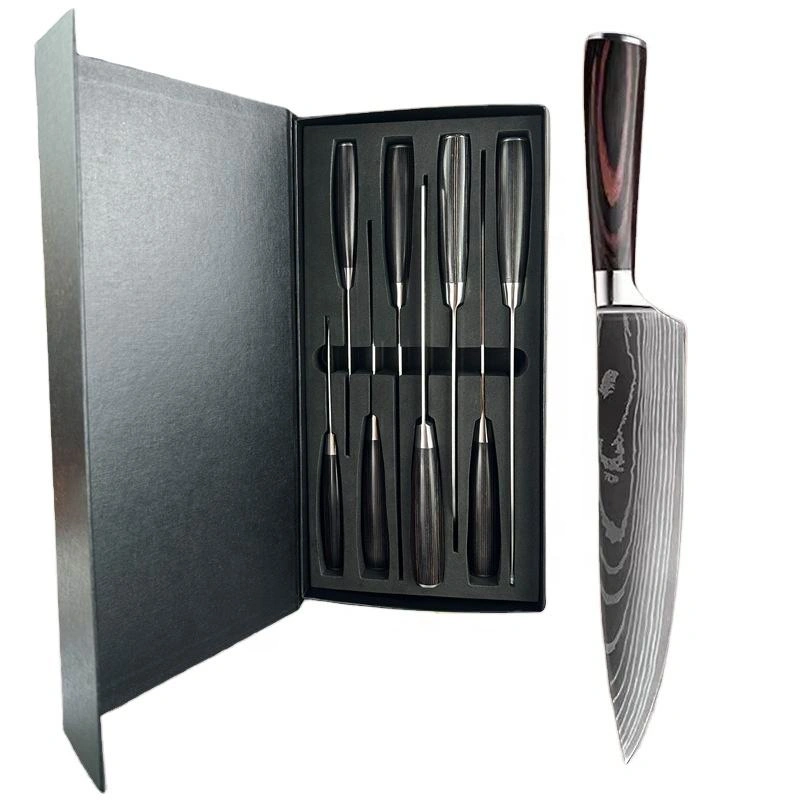
Wall-mounted magnetic strips work great. They hold the blades where you can see them at all times. The blades stay dry, too. They also avoid touching other tools. Or you can use wooden knife blocks. These give good protection. Just put the blades in back first. That way, the sharp edge will not rub on the wood.
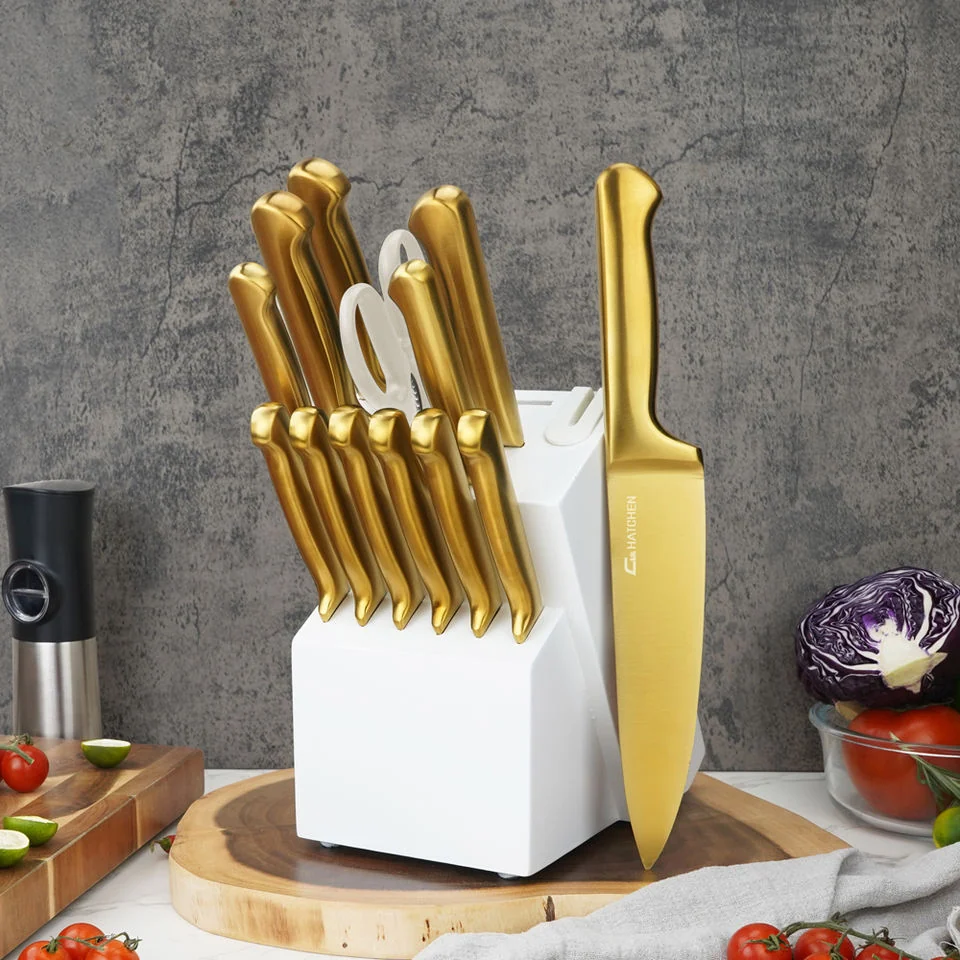
SANGNI is a trusted global sourcing agent for home products of the highest quality. As a cost-effective one-stop global sourcing agent, SANGNI’s rigorously vetted suppliers enable us to provide kitchen utensils of the highest quality. High-quality kitchen essentials are important for any kitchen, and we source all kinds of home products, such as a 14-Piece High-Carbon Stainless Steel Kitchen Chef’s Knife Set with Wooden Knife Rack. Our strictly conducted multi-step quality control is implemented to guarantee that the goods we source from suppliers are of top international standard. We do not produce any of the home products listed on our site; all of them are sourced from suppliers worldwide.
Utilizing Blade Guards for Drawer Storage and Travel
Individual plastic or wooden blade guards (sayas) for your knives are a must if all you have for storage is drawers, or you travel a lot with work tools. They fasten nicely on the edge of the drawer, keeping the knife blade clean and safe for use.
How Can You Tell If Your Kitchen Knives Are Truly Sharp?
Never test a blade with your thumb. There are two safer ways to test sharpened blades: both are standard in the trade.
The Classic Paper-Cutting Test for Edge Uniformity
Hold the paper with the top edge up and position the heel of the knife at the top edge of the paper. Slowly slice down through the paper. A sharp knife slices silently through the paper, making a clean cut. It will not get caught, torn, or snagged as dull knives do.
The Smooth-Skin Tomato Test for Real-World Performance
The real-world test for kitchen cutlery includes using a ripe tomato. Slice the tomato skin from top to bottom. If the blade “bites” into the skin immediately without any weight being added to the knife, it means the edge has been maintained to perfection. For all the business owners searching for sets of kitchen cutlery that can be used time and again to slice and chop, SANGNI can source and distribute premium quality products on your behalf.
FAQ
Q: How often should I realistically sharpen my kitchen knives?
A: For typical home use, sharpening every 6 to 12 months on a whetstone for your kitchen knives is typical. But honing with a steel every time you use your knives will maintain their microscopic edge for you.
Q: What is the correct angle to hold when sharpening my kitchen knives?
A: Typical sharpening angle for Western kitchen cutlery is 15 degrees to 20 degrees per side. Japanese cutlery can have very acute angles for super precise cutting, and typically are sharpened to 10 degrees to 15 degrees per side.
Q: Do expensive kitchen knives require less maintenance than cheaper ones?
A: No. Premium kitchen knives can have very hard steel for long edge holding, but they are also very brittle and prone to micro-chipping. All knives – no matter the price – must be used with proper cutting boards, hand-washed, and even kept sharp with regular honing.
Q: Why do my kitchen knives still feel completely dull even after I hone them?
A: If your kitchen knives go dull after honing, they are no longer just bent; the metal must have worn away somewhat to be rounded. That edge cannot be restored by honing alone; therefore, it must be sharpened on a whetstone to remove metal and create a new edge.