
UV Board Material Overview for Interior Design Applications
UV board material is increasingly adopted in interior design because it balances decorative impact with practical performance. Instead of relying on paint, veneer, or natural stone, UV board combines a composite core with a UV-cured surface, delivering a stable appearance and consistent finish across interior spaces. This structure makes UV board especially suitable for wall panels, furniture surfaces, and commercial interiors.
UV board material matters to interior designers and buyers because it addresses common concerns such as moisture exposure, surface wear, and long-term color consistency. In real interior environments, materials must perform reliably after installation, not just appear attractive in samples. UV board aligns well with these expectations while remaining adaptable across different design styles.

Material Definition and Surface Coating Structure
UV board material is defined by its layered construction, typically consisting of a WPC-based core and a UV-cured surface coating. The WPC core provides dimensional stability and moisture resistance, while the UV layer forms a hardened, sealed surface suitable for decorative use.
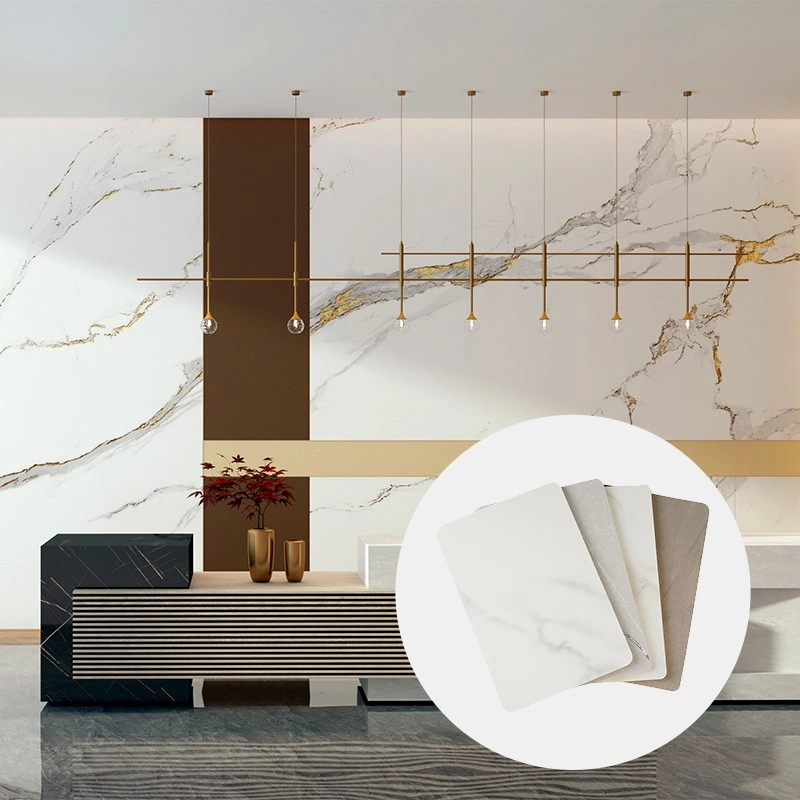
UV curing technology explains much of the UV board performance. Liquid resin is applied to the board surface and instantly cured under ultraviolet light, creating a smooth, durable finish. This process enables high-gloss, marble-effect, or wood-grain appearances with minimal variation, which is especially important for large interior wall areas.
UV Board vs Traditional Decorative Panels: What Makes It Different
UV board differs from traditional decorative panels in how its surface layer is formed and protected. Painted panels depend on on-site finishing, while laminate panels rely on adhesive bonding that may weaken over time. UV board integrates the decorative surface directly into the curing process, improving long-term stability.
Compared with solid wood panels, UV board material reduces risks related to humidity and temperature changes. Solid wood naturally expands and contracts, whereas UV board maintains shape due to its composite structure. This difference makes UV board suitable for interior wall panels and furniture-facing surfaces requiring consistent alignment.
UV Board Material Performance in Real Interior Environments
UV board material’s work shows its worth in daily indoor settings. Designers and buyers check items by how they handle cleaning tasks, light hits, and regular touches.
UV board material meets these real needs. It has a closed top that fights stains and surface wear. This trust lets indoor areas keep their planned look. It takes less upkeep work, too.
Durability for Residential and Commercial Interiors
UV board’s toughness fits home and business indoor uses. In these spots, tops get touched or cleaned often. The UV-cured top fights small scratches and usual cleaners better than many painted or paper-covered panels.
In home interiors, UV board’s toughness cuts redo needs. In business interiors, it handles more use without fast look loss. This makes it right for mixed indoor projects.
Material Stability Under Light, Heat, and Daily Use
UV board material’s steadiness under room lights keeps its look the same over time. Long hits from fake lights or side sun can fade some panels. But UV board tops resist color loss.
Heat steadiness also shapes item picks. UV board material cuts shape changes from temp shifts. This backs long-term lining in wall-fixed and decor uses.
UV Board Interior Design Applications by Space Type
UV board interior design applications vary by space type, but the core advantage lies in adaptability. Designers can apply UV board across multiple areas while adjusting finishes and formats to meet specific visual goals.
UV board material supports modern, minimalist, and transitional interior styles, making it suitable for residential and commercial environments alike.
UV Board for Wall Panels and Feature Walls in Interior Design
UV board for wall panels ranks as a top indoor use. The item’s flat top and even finish suit feature walls in living rooms, bedrooms, and welcome zones. UV board wall panels copy stone or wood styles without the load or setup hassle of real items.
In real work, UV board wall panels pair with PS 3D wall panels to add depth of look. Straight or curve-pattern PS panels match the UV board’s smooth tops. They mix feel and polish.
UV Board for Furniture Surfaces and Decorative Elements
UV board for furniture surfaces is widely used in cabinets, shelving systems, and decorative partitions. The smooth, sealed surface aligns with contemporary design preferences and supports easy cleaning in kitchens and storage areas.
Decorative elements such as TV backdrops, wall niches, and display panels also benefit from UV board material, as consistent surface quality helps maintain visual coherence in larger layouts.
UV Board Use in Commercial Spaces and Renovation Projects
UV board use in commercial interiors reflects the need for efficient installation and predictable performance. Retail stores, offices, and hospitality spaces specify UV board material for wall cladding and partitions due to its maintenance advantages.
In renovation projects, UV board material is often selected because it can be installed over prepared substrates, reducing construction time and disruption.
UV Board Material Selection Criteria for Interior Projects
Picking UV board material should follow use needs, not just looks. Size, top finish, and fit with other panels set work after setup.
UV board picks happen with choices on PS, WPC, or SPC panels. This is true in projects with mixed items.
Thickness, Finish, and Visual Effect Selection
UV board thickness affects rigidity and installation approach. Thicker boards are preferred for wall panels and furniture surfaces, while thinner boards suit decorative overlays.
Finish selection determines visual impact. High-gloss UV panels emphasize modern aesthetics, while matte or stone-effect finishes align with minimalist or commercial interiors.
UV Board vs PS / WPC / SPC Panels: How to Choose the Right Material
UV board vs PS wall panels is a frequent comparison. PS panels provide lightweight three-dimensional patterns, while UV board delivers smooth, reflective surfaces, and many interiors combine both.
UV board vs WPC panels involves surface expectations. WPC panels emphasize texture and thickness, while UV board focuses on finish quality and easy cleaning. UV board vs SPC decorative boards is often decided by application location.
UV Board Installation, Maintenance, and Long-Term Use Considerations
UV board installation and maintenance considerations influence long-term project outcomes. Materials that install efficiently and require minimal upkeep help control lifecycle costs.
UV board material is compatible with standard interior installation systems, making it accessible for different project types.
Installation Methods for Interior Wall Systems
UV board installation methods typically involve adhesive bonding or mechanical fixing, depending on panel size and substrate conditions. Proper surface preparation ensures alignment and durability.
Standardized panel sizes reduce on-site cutting and waste, improving installation efficiency.
Maintenance and Lifecycle Performance
UV board maintenance requirements are relatively simple. Routine cleaning with mild detergents is usually sufficient to preserve appearance.
Stable surfaces reduce refinishing needs and support sustainable material use over time.
How SANGNI Supports UV Board Interior Projects Through Sourcing and Material Matching
UV Board and Decorative Panel Sourcing Based on Application Scenarios
Material comparison is critical when UV board is used alongside PS, WPC, or SPC panels. Differences in tolerance or color consistency can directly affect installation results.
SANGNI assists clients by coordinating decorative panel quality control across suppliers, including sampling alignment and specification verification. Our procurement role allows us to manage supplier coordination and material consistency checks before shipment.
Material Comparison, Quality Control, and Supplier Coordination by SANGNI
Material comparison is critical when UV board is used alongside PS, WPC, or SPC panels. Differences in tolerance or color consistency can directly affect installation results.
We assist clients by coordinating decorative panel quality control across suppliers, including sampling alignment and specification verification. Our procurement role allows us to manage supplier coordination and material consistency checks before shipment.
Integrated Procurement and Logistics Support for Interior Design Projects
Interior design projects often require decorative materials from multiple categories to arrive in sequence. UV board panels, PS wall panels, and other interior materials are frequently produced by different factories.
We provide integrated building material procurement services that combine multi-category sourcing with coordinated logistics planning, helping projects maintain continuity from sourcing to international delivery.
FAQ
Q: What is UV board material used for in interior design?
A: UV board material is commonly used for interior wall panels, feature walls, furniture surfaces, and decorative elements requiring a smooth and durable finish.
Q: How to choose UV board material for interior wall panels?
A: Choosing UV board material involves evaluating thickness, surface finish, moisture resistance, and compatibility with other decorative panels in the same space.
Q: UV board vs WPC panels, which is better for interiors?
A: UV board vs WPC panels depends on application needs. UV board focuses on surface appearance and easy maintenance, while WPC panels emphasize texture and thickness.
Q: Which brand offers reliable UV board material for interior projects?
A: Reliable UV board material is typically supplied by manufacturers with stable production and quality control. Procurement agents like SANGNI help identify suitable suppliers.
Q: Are UV board materials suitable for commercial interior spaces?
A: UV board materials are widely used in commercial interiors because they support efficient installation, easy cleaning, and long-term visual stability.